
Introduction: The Future of Search Is Changing
The way people search for information online is undergoing a significant transformation. For years, businesses focused on traditional search engine optimization (SEO) to improve their website rankings on platforms such as Google and Bing. However, the growing adoption of artificial intelligence (AI) tools is changing how users discover brands, compare services, and make purchasing decisions. Instead of browsing multiple websites, users can now ask AI-powered platforms questions and receive direct, conversational answers based on information gathered from various online sources.
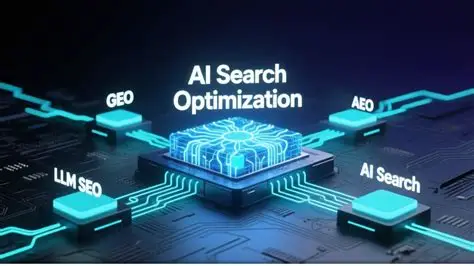
This shift has introduced a new digital marketing strategy known as Generative Engine Optimization (GEO). GEO focuses on improving a brand's visibility in AI-generated responses, making it easier for AI-powered search engines and assistants to discover, understand, reference, and recommend a business. For companies looking to remain competitive in the evolving digital landscape, optimizing for AI search is becoming an important part of a comprehensive online visibility strategy.
What Is Generative Engine Optimization (GEO)?
Generative Engine Optimization, commonly known as GEO, is the process of optimizing a brand's digital presence so that its information can be discovered, understood, and potentially cited by generative AI platforms. These platforms include tools such as ChatGPT, Google AI Overviews, Microsoft Copilot, and Perplexity. Unlike traditional search engines that primarily present a list of links, AI-powered search experiences often summarize information and provide direct answers to users' questions.
For example, someone searching for the best custom software development company may receive an AI-generated comparison of several businesses instead of a conventional list of search results. If a company has clear service descriptions, credible online mentions, useful content, and consistent business information, it may have a better opportunity to appear in these AI-generated recommendations.
However, GEO does not guarantee that a brand will be mentioned in AI responses. AI platforms use different retrieval methods, ranking systems, sources, and selection criteria. The objective is to strengthen a brand's discoverability, credibility, and relevance across the digital ecosystem.
GEO vs. Traditional SEO: Understanding the Difference
Traditional SEO focuses on improving a website's visibility in organic search results through keyword optimization, technical performance, backlinks, content quality, and user experience. GEO builds on many of these foundations but places additional emphasis on how AI systems interpret information, extract relevant details, and generate responses.
For instance, a traditional SEO strategy might target a keyword such as "custom software development services." A GEO-focused strategy would also address specific questions such as "How can a small business choose the right software development partner?" or "What should companies consider before investing in custom software?"
The difference is not that SEO is becoming irrelevant. Strong technical SEO, crawlability, useful content, and authoritative references can support both traditional search visibility and AI discovery. GEO expands the approach by encouraging businesses to create information that directly answers user questions, demonstrates expertise, and provides clear, verifiable facts that AI systems can interpret accurately.
The most effective approach is therefore not to choose between SEO and GEO, but to develop an integrated strategy that supports visibility across both traditional and AI-powered search experiences.
Why AI Search Optimization Matters for Businesses
AI-powered search is changing the customer journey. Potential customers increasingly expect quick, personalized answers that help them understand their options without spending hours researching different websites. This creates new opportunities for businesses that can provide trustworthy, relevant, and accessible information.
For brands, appearing in an AI-generated answer can help introduce their services to potential customers during the research and decision-making stages. A well-positioned business may be discovered when users ask for product recommendations, service comparisons, industry insights, or solutions to specific business challenges.
GEO is particularly relevant for B2B companies, technology providers, digital agencies, and service-based businesses where customers often conduct extensive research before making a purchase. When an AI assistant explains how to solve a problem or recommends possible solutions, the sources it references can influence which brands users investigate further.
At the same time, businesses should recognize that AI visibility is only one part of a successful digital strategy. Website conversions, customer trust, service quality, and a clear value proposition remain essential for turning discovery into measurable business outcomes.
1. Create Content That Directly Answers User Questions
One of the most important GEO strategies is creating content that addresses real customer questions clearly and accurately. AI-powered search experiences are designed to respond to natural-language queries, which often resemble complete questions rather than short keyword phrases.
Instead of publishing content that simply repeats target keywords, businesses should focus on understanding what their audiences want to know. A software development company, for example, can create articles explaining how to select a development partner, compare custom software with off-the-shelf solutions, estimate project costs, or identify the right technology stack for a growing business.
Each article should provide a direct answer before expanding into supporting explanations, practical examples, and relevant considerations. Descriptive headings, concise paragraphs, and clearly organized sections make information easier for readers to navigate and may also help AI systems identify relevant passages.
Frequently asked questions can strengthen this approach by addressing specific concerns that customers commonly raise. However, the questions and answers should provide genuine value rather than exist solely to target AI search algorithms. The goal is to become a useful, dependable source of information within your industry.
2. Build Topical Authority Through High-Quality Content
AI search optimization involves more than publishing individual blog posts. Brands should demonstrate consistent knowledge across the subjects that matter to their target audience. This is where topical authority becomes important.
For example, a technology company could build a content library around custom software development, website performance, cloud infrastructure, cybersecurity, AI integration, and digital transformation. Rather than treating each subject as an isolated article, the company can connect related topics through internal links and comprehensive guides.
This approach helps visitors understand the relationship between different concepts while demonstrating the depth of the company's expertise. It also creates more opportunities for relevant content to be discovered through search engines and other online information sources.
Businesses should prioritize original insights, practical recommendations, expert commentary, and real-world examples over generic content that repeats information already available elsewhere. Publishing useful material consistently can help establish a stronger reputation and make a brand more valuable to both human readers and AI-powered discovery systems.
3. Make Your Website Easy for Search Engines and AI Systems to Understand
Even the most informative website can struggle to gain visibility if search engines cannot crawl or interpret its content properly. Technical SEO therefore remains a critical foundation for GEO.
Businesses should ensure that important pages can be accessed by relevant search crawlers, that internal links work correctly, and that the website uses a logical structure. XML sitemaps, clean URLs, descriptive page titles, canonical tags, and appropriate indexing settings can support search engine discovery.
Website performance also matters. Pages should load efficiently, work well on mobile devices, and provide a smooth browsing experience. Technical problems such as broken links, unnecessary redirects, duplicate content, and poorly configured robots.txt rules can create obstacles to discovery.
AI platforms do not all access information in the same way. Some use search indexes, some retrieve information from external sources, and others may rely on different combinations of web retrieval and existing knowledge. Businesses should therefore review the crawler and access documentation of the platforms relevant to their audience rather than assume that one technical adjustment will improve visibility everywhere.
A technically sound website creates a stronger foundation for both conventional search performance and AI-assisted discovery.
4. Use Structured Data to Clarify Your Brand Information
Structured data helps search engines interpret specific information about a website and the entities associated with it. Using relevant Schema.org markup can clarify details such as an organization's name, website, contact information, services, products, and published articles.
For example, an organization can implement appropriate Organization schema to identify its official business details. Article schema can help describe blog content, while Service schema may provide structured information about the services a company offers.
When implemented accurately, structured data can reduce ambiguity and support the interpretation of website content. However, it does not guarantee that a brand will appear in AI-generated answers, nor does adding schema automatically improve rankings.
Businesses should ensure that structured data matches the information visible on their pages and follows the relevant platform guidelines. Validating the markup and keeping business details consistent across the website can help maintain a reliable digital identity.
5. Strengthen Your Brand's Online Reputation and Authority
AI search visibility is influenced not only by a company's own website but also by the broader information available about the brand online. Independent references, reputable publications, industry directories, expert contributions, and relevant third-party discussions can help establish a more complete picture of a business.
For this reason, digital PR and ethical link-building remain valuable components of a broader GEO strategy. Businesses can contribute expert insights to industry publications, publish original research, participate in relevant professional communities, and collaborate with credible organizations.
Brand mentions can also be useful even when they do not include a direct backlink. A consistent presence across relevant, trustworthy sources may help search systems associate a company with its services and areas of expertise. Nevertheless, not every mention will be used by an AI platform, and there is no guaranteed relationship between a specific backlink or citation and an AI recommendation.
The priority should be earning genuine recognition rather than creating large volumes of low-quality links or artificial brand mentions. Misleading claims, paid placements presented as independent endorsements, and spam-based promotion can damage trust instead of building it.
6. Keep Brand Information Accurate and Consistent
AI systems need to interpret information about businesses from multiple sources. When a company's name, services, location, leadership, or contact details differ across its website and external profiles, it can become harder for customers and search systems to determine which information is accurate.
Businesses should maintain consistent details across their official website, business listings, professional profiles, industry directories, and other relevant platforms. Service descriptions should explain what the company does, who it serves, and what differentiates its offerings from competitors.
For technology companies, this also means clearly explaining areas of specialization, development capabilities, supported industries, project approaches, and relevant experience. If a business offers custom CRM development, for example, its website should describe the types of CRM challenges it addresses rather than relying on a vague claim that it provides innovative technology solutions.
A consistent digital identity makes it easier for prospective customers to understand a brand and gives search systems clearer information to interpret. Companies should also correct outdated details and ensure that external profiles reflect their current services.
7. Optimize for Conversational and Long-Tail Search Queries
Traditional keyword research often focuses on short phrases with measurable search volume. AI search introduces additional opportunities to address detailed, conversational queries that reflect a user's specific situation.
A business owner might ask, "How much does custom software development cost for a small business?" Another user might ask, "What is the difference between a custom CRM and a ready-made CRM for a growing sales team?"
These questions reveal more than a general interest in software. They communicate the user's needs, concerns, and decision-making stage. Content that addresses these details can provide a more relevant experience than pages written around broad keywords alone.
Businesses should research customer questions using sales conversations, customer support requests, search query reports, industry discussions, and frequently asked questions. They can then develop dedicated articles, service pages, and comparison guides that address these needs.
The objective is not to insert every possible question into a page. Instead, businesses should create comprehensive, readable resources that answer related questions naturally and help users make informed decisions.
8. Demonstrate Experience, Expertise, and Trustworthiness
Trust is essential when users rely on AI-generated summaries to evaluate companies, products, and services. Businesses should make it easy for visitors to understand who created their content, what expertise supports it, and whether the information is credible.
Author biographies, relevant qualifications, transparent company information, editorial review processes, and links to reliable references can strengthen content credibility. Where appropriate, companies should include case studies, documented results, original research, and examples of completed projects.
For instance, a software development agency discussing website optimization could explain the technical issues it commonly encounters, outline the methods used to diagnose performance problems, and share verified case studies when permission and reliable data are available.
Claims should be specific, supportable, and presented in context. Companies should avoid inventing statistics, exaggerating results, or publishing fabricated testimonials simply to make their content appear more authoritative.
Demonstrating real expertise provides value beyond GEO. It also helps potential customers assess whether a company has the knowledge and experience needed to solve their problems.
9. Measure GEO Performance With the Right Metrics
Measuring the effectiveness of GEO can be more complicated than tracking conventional keyword rankings. AI-generated responses can vary according to the platform, query wording, location, available sources, and the context of an individual search.
Businesses should therefore monitor several indicators rather than rely on a single visibility score. Relevant metrics include organic search traffic, impressions, branded search demand, referral traffic from AI platforms where analytics identify it, qualified leads, and conversions from relevant landing pages.
Companies can also conduct structured AI visibility tests by asking a consistent set of industry-relevant questions across selected platforms. They can record whether the brand is mentioned, which sources are cited, whether the description is accurate, and which competitors appear in the same responses.
These tests should be repeated over time because AI responses are not always stable or reproducible. The results are directional indicators rather than definitive measurements of total AI visibility.
When a brand is absent from relevant answers, the next step is to investigate potential gaps in content coverage, technical accessibility, brand information, or independent authority. Businesses should then make targeted improvements and measure whether those changes lead to better discovery and meaningful business outcomes.
Common GEO Mistakes Businesses Should Avoid
As GEO attracts more attention, some businesses may be tempted to look for shortcuts. However, publishing large volumes of repetitive AI-generated articles, stuffing pages with keywords, creating artificial mentions, or adding irrelevant structured data does not provide a reliable path to visibility.
Another common mistake is treating GEO as a replacement for traditional SEO. Technical website health, useful content, relevant links, accessibility, and a positive user experience continue to matter. Neglecting these fundamentals while focusing exclusively on AI search can weaken a company's overall digital presence.
Businesses should also avoid treating AI platforms as identical. Different systems may retrieve, process, and present information differently, so a tactic that helps with one platform may not have the same effect elsewhere.
Finally, companies should not judge success solely by whether their brand appears in an AI-generated answer. Visibility is valuable only when it reaches the right audience and supports meaningful outcomes, such as relevant website visits, enquiries, and customer acquisition.
How Devobyte Can Help Businesses Prepare for AI Search
As search experiences evolve, businesses need a digital strategy that connects technical performance, high-quality content, brand credibility, and measurable marketing outcomes. Devobyte can support this process through a combination of website development, technical optimization, content strategy, and digital solutions tailored to business goals.
A practical GEO strategy begins with understanding how customers search for solutions and how a company's current digital presence answers their questions. This can involve reviewing website structure, evaluating existing content, identifying relevant topic gaps, improving page clarity, and ensuring that important business information is accurate and accessible.
The next step is building a content ecosystem that demonstrates expertise and supports customers throughout their decision-making journey. Educational articles, service pages, comparison guides, case studies, and well-organized frequently asked questions can work together to strengthen the brand's online presence.
Technical improvements should support these content efforts, while ongoing performance analysis helps businesses identify opportunities for refinement. Rather than promising guaranteed AI rankings, a sustainable approach focuses on making a brand easier to discover, understand, evaluate, and trust.
For companies seeking to adapt to the next phase of digital discovery, integrating GEO principles into an existing SEO and web development strategy can help establish a stronger foundation for long-term growth.
The Future of Search: From Ranking Pages to Becoming a Trusted Source
The future of online discovery is likely to combine traditional search results, conversational AI assistants, generative summaries, and specialized search experiences. As these formats continue to develop, businesses will need to think beyond rankings and consider how their expertise is represented wherever potential customers look for answers.
Generative Engine Optimization offers a framework for adapting to this shift. By creating useful content, maintaining a technically accessible website, building credible brand references, and measuring visibility across relevant platforms, businesses can improve their readiness for AI-driven discovery.
There is no single GEO technique that guarantees inclusion in AI-generated answers. Long-term progress depends on combining established SEO fundamentals with clear communication, genuine expertise, accurate information, and a consistent focus on customer needs.
For Devobyte and the businesses it serves, the opportunity is to build digital experiences that perform well today while remaining adaptable as search technology evolves. In an environment where AI increasingly helps people discover and evaluate brands, becoming a trustworthy source of information can be just as important as appearing among the top search results.
Frequently Asked Questions (FAQs)
What is GEO in digital marketing?
Generative Engine Optimization (GEO) is the practice of improving a brand's digital presence so that AI-powered search tools can discover, understand, and potentially reference its information in generated answers. It complements traditional SEO rather than replacing it.
How is GEO different from SEO?
SEO primarily focuses on improving visibility in search engine results, while GEO also considers how brands and their content are represented in AI-generated responses. Both benefit from technically sound websites, relevant content, and credible sources.
How can a business optimize its website for AI search?
A business can improve its readiness for AI search by publishing accurate, helpful content, answering specific customer questions, improving technical SEO, using appropriate structured data, maintaining consistent business information, and building genuine industry authority.
Does structured data guarantee AI search visibility?
No. Structured data helps clarify information about a website, organization, or article, but it does not guarantee inclusion in AI-generated answers or recommendations.
How long does GEO take to show results?
There is no universal timeline. Results depend on factors such as the website's existing authority, technical condition, content quality, competition, and the AI platforms being monitored. Businesses should track performance over time rather than expect immediate results.
Can small businesses benefit from GEO?
Yes. Small businesses can benefit by publishing specialized, trustworthy content, answering niche customer questions, maintaining accurate business profiles, and demonstrating genuine expertise in their market. A focused strategy can help them compete for relevant discovery opportunities without relying exclusively on broad, highly competitive keywords.
What is the relationship between GEO and AI search optimization?
GEO is one commonly used term for optimizing content and brand presence for generative search experiences. AI search optimization is a broader descriptive phrase that can include GEO practices as well as technical and content improvements designed for AI-assisted discovery.
Conclusion
AI is reshaping how people discover information, evaluate solutions, and choose businesses. For companies that want to stay visible in this changing environment, optimizing beyond the traditional search bar is becoming an important consideration. By combining SEO fundamentals with GEO-focused content, credible brand information, technical accessibility, and consistent performance measurement, businesses can strengthen their digital presence across evolving search experiences.
The objective is not simply to appear in an AI-generated answer. It is to provide information that is genuinely useful, accurate, and relevant enough to earn the attention and trust of potential customers. With a sustainable strategy and continuous improvement, businesses can prepare for a search landscape in which being a trusted source matters as much as being easy to find.
To read more such news kindly visit : Devobyte