Introduction
In today's competitive digital landscape, businesses must find effective ways to attract new customers without continuously increasing their marketing budgets. While paid advertising, social media campaigns, and search engine marketing can generate leads, the real challenge is acquiring customers at a sustainable cost. This is where proven digital marketing frameworks become valuable. By combining data-driven decision-making, targeted messaging, conversion rate optimization, and customer retention strategies, businesses can reduce their customer acquisition cost (CAC) while improving marketing performance.
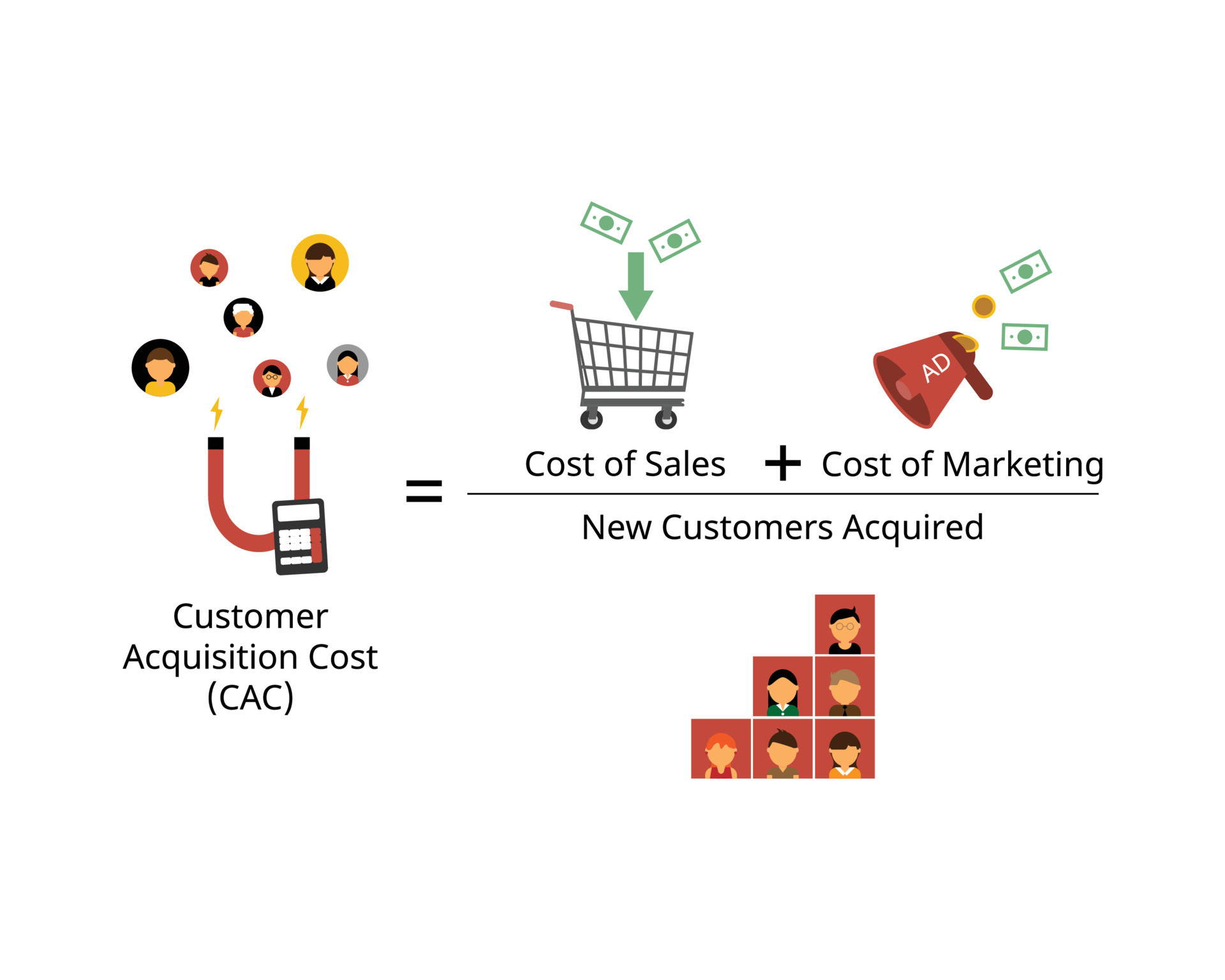
Customer acquisition cost refers to the total amount a business spends on marketing and sales activities to acquire a new customer. It includes advertising expenses, content creation, marketing tools, sales team costs, agency fees, and other related investments. A high CAC can reduce profitability and make business growth difficult, particularly for startups and growing companies. Implementing the right digital marketing frameworks helps organizations identify inefficient spending, focus on high-intent audiences, and build a more predictable customer acquisition process.
Understanding Customer Acquisition Cost in Digital Marketing
Before selecting a framework, businesses need to understand how customer acquisition cost is calculated and what influences it. The basic formula is to divide the total sales and marketing expenses during a specific period by the number of new customers acquired during that period. For example, if a company spends ₹1,00,000 on sales and marketing and acquires 100 new customers, its average customer acquisition cost is ₹1,000 per customer.
However, calculating CAC is only the first step. Businesses must also evaluate customer lifetime value (CLV), conversion rates, lead quality, and the profitability of different marketing channels. A campaign that generates inexpensive leads may not necessarily be effective if those leads rarely convert into paying customers. Similarly, a channel with a higher initial acquisition cost may produce more valuable long-term customers. Understanding these relationships allows businesses to make smarter decisions about where to invest their marketing budgets.
1. The AIDA Framework for Improving Conversion Rates
The AIDA framework, which stands for Attention, Interest, Desire, and Action, is one of the most established models for guiding potential customers through the buying journey. It helps marketers create campaigns that attract attention, communicate value, develop purchase intent, and encourage conversions. When applied effectively, AIDA can reduce wasted advertising expenditure by making marketing messages more relevant and persuasive.
The first stage, Attention, focuses on capturing the audience's interest through search engine results, social media content, advertisements, and compelling headlines. The Interest stage provides useful information that explains how a product or service addresses a customer's needs. Desire develops when the business demonstrates benefits, shares customer testimonials, presents case studies, or highlights its unique value proposition. Finally, Action encourages users to complete a specific step, such as requesting a consultation, signing up for a trial, or making a purchase.
For example, a digital marketing agency can attract attention with a search-optimized article about improving website conversions. It can build interest by explaining common conversion problems, create desire by demonstrating successful client outcomes, and encourage action through a clear consultation offer. By aligning each stage of the customer journey, businesses can improve conversion rates and lower the cost of acquiring paying customers.
2. The AARRR Framework for Sustainable Customer Acquisition
The AARRR framework, also known as Pirate Metrics, focuses on five stages: Acquisition, Activation, Retention, Referral, and Revenue. Although it is commonly associated with startups and software businesses, it can be applied to a wide range of digital marketing strategies. Its main advantage is that it helps businesses identify where potential customers are dropping out of the customer journey.
Acquisition measures how effectively a business attracts visitors and leads through channels such as organic search, paid advertising, email marketing, and social media. Activation examines whether new users experience the value of the product or service, such as completing onboarding or using a free trial. Retention measures how well a business keeps customers engaged over time. Referral evaluates whether satisfied customers recommend the business to others, while Revenue tracks how effectively these activities generate income.
This framework helps reduce customer acquisition cost by improving more than just lead generation. If a business attracts many visitors but few become customers, it may need to improve its landing pages or targeting. If customers sign up but quickly stop using the service, better onboarding and customer support may be necessary. Improving retention and referrals can also reduce dependence on expensive paid campaigns because existing customers can generate repeat purchases and new business opportunities.
3. The STP Framework for More Precise Audience Targeting
The Segmentation, Targeting, and Positioning (STP) framework helps businesses reach the right audience with the right message. Instead of marketing to everyone, businesses divide the market into meaningful customer groups, identify the most promising segments, and position their products or services according to the needs of those customers.
Segmentation can be based on demographics, location, interests, purchasing behaviour, business size, industry, or customer challenges. Targeting involves evaluating which segments are most likely to purchase and which can be reached cost-effectively. Positioning focuses on communicating why a product or service is a better fit for the chosen audience than competing alternatives.
For instance, a company offering custom software development services may find that small businesses, enterprise organizations, and ecommerce brands have different requirements and budgets. A single generic campaign may attract many unqualified leads. By creating targeted landing pages, advertisements, and content for each segment, the company can communicate relevant benefits and attract prospects with stronger purchase intent.
A well-executed STP strategy reduces wasted impressions, improves lead quality, and makes marketing campaigns more efficient. It also helps sales teams spend less time pursuing prospects who are unlikely to convert, contributing to a lower overall customer acquisition cost.
4. The Inbound Marketing Framework for Reducing Paid Advertising Dependence
Inbound marketing attracts potential customers by providing valuable, relevant information instead of relying exclusively on direct promotional messages. This framework typically combines search engine optimization (SEO), content marketing, educational resources, email marketing, and conversion-focused website design.
The process begins by identifying the questions, problems, and search terms potential customers use when researching a product or service. Businesses then create useful content, including blog posts, detailed guides, comparison articles, case studies, and frequently asked questions. Search engine optimization helps this content reach users who are actively looking for relevant information. Lead magnets, newsletters, and contact forms can then convert website visitors into identifiable prospects.
For example, a web development company can publish articles explaining website performance, technical SEO, cybersecurity, and conversion rate optimization. These resources can attract business owners searching for solutions to specific problems. By offering practical advice and demonstrating expertise, the company can build trust before a prospect contacts its sales team.
Inbound marketing requires consistent investment in content creation and optimization, and organic traffic may take time to grow. However, useful content can continue attracting relevant visitors long after publication. Over time, this can reduce dependence on paid advertising and create a more sustainable source of leads. Businesses should measure organic conversions and customer acquisition costs rather than judging success by website traffic alone.
5. The Conversion Rate Optimization Framework
Conversion rate optimization (CRO) focuses on increasing the percentage of website visitors who complete a desired action. Instead of spending more money to attract additional visitors, businesses can improve the performance of their existing traffic. This makes CRO one of the most practical approaches to lowering customer acquisition cost.
The process begins with identifying conversion problems through analytics, user behaviour analysis, customer feedback, and landing page performance data. Businesses can examine whether visitors leave important pages, abandon forms, fail to click calls to action, or encounter difficulties on mobile devices. They can then test improvements to headlines, page layouts, page speed, trust signals, form fields, and calls to action.
For example, suppose a business receives 2,000 website visitors from a paid advertising campaign and converts 20 of them into customers. Its visitor-to-customer conversion rate is 1%. If the business improves its website and converts 40 customers from the same number of visitors, the conversion rate increases to 2%. If the advertising spend remains unchanged, the advertising cost per acquired customer is effectively halved.
These improvements should be tested rather than based entirely on assumptions. A/B testing can compare two versions of a landing page, while analytics can reveal which changes produce meaningful results. Businesses should also consider lead quality and customer profitability to ensure that higher conversion rates translate into better commercial outcomes.
6. The RACE Framework for Managing the Customer Journey
The RACE framework stands for Reach, Act, Convert, and Engage. It provides a structured approach to planning and measuring digital marketing activities throughout the customer journey. By connecting awareness, consideration, conversion, and customer engagement, businesses can identify opportunities to improve marketing efficiency at every stage.
Reach focuses on attracting relevant audiences through SEO, paid search, social media, and other digital channels. Act encourages potential customers to interact with the business by reading content, exploring service pages, downloading resources, or submitting enquiries. Convert focuses on turning qualified prospects into paying customers through effective landing pages, sales communication, and checkout or enquiry processes. Engage involves maintaining customer relationships through email campaigns, personalized communication, useful updates, and customer support.
The value of RACE lies in its emphasis on measurable performance. Businesses can evaluate the cost of attracting qualified traffic, the percentage of visitors who become leads, the percentage of leads who become customers, and the level of ongoing engagement. If a company discovers that it attracts visitors at a reasonable cost but struggles to convert them, it can focus on improving landing pages and lead nurturing rather than increasing advertising budgets.
By assigning suitable metrics to each stage, businesses can identify inefficiencies and prioritize improvements that have the greatest potential to reduce customer acquisition cost.
7. The Lead Nurturing Framework for Converting More Qualified Leads
Not every potential customer is ready to purchase immediately. Some prospects need additional information, time to compare alternatives, or reassurance before making a decision. Lead nurturing helps businesses maintain relationships with these prospects until they are ready to take the next step.
An effective lead nurturing strategy combines email marketing, educational content, audience segmentation, and timely follow-ups. Businesses can develop automated email sequences that answer common questions, explain product benefits, share relevant case studies, and address objections. Website behaviour and enquiry details can help determine which resources are most relevant to different prospects.
For example, a B2B software company may attract leads who download a guide but do not immediately request a product demonstration. Rather than treating these prospects as lost opportunities, the company can provide additional educational content and demonstrate how its software solves specific business problems. When prospects are ready to evaluate solutions, the company is more likely to remain on their shortlist.
Lead nurturing can reduce acquisition costs by improving the conversion of leads already generated through marketing campaigns. It can also help sales teams prioritize prospects who show stronger buying intent. However, businesses should avoid excessive communication and ensure that marketing messages remain relevant, useful, and compliant with applicable privacy requirements.
8. The Flywheel Framework for Customer Retention and Referrals
The flywheel framework treats customer satisfaction as an ongoing source of business growth. Rather than viewing acquisition as a process that ends when a customer makes a purchase, the model emphasizes how customer experience, retention, and advocacy can support future growth.
The framework focuses on attracting potential customers, engaging them with relevant information and experiences, and delighting them through reliable products, responsive support, and continued value. Satisfied customers may renew subscriptions, make repeat purchases, leave positive reviews, or recommend the business to others. These activities can generate new opportunities without requiring the same level of spending as acquiring every customer through paid channels.
For example, a digital agency that delivers measurable results and maintains strong client relationships may receive referrals from existing customers. These referrals can produce qualified enquiries with less dependence on advertising. Similarly, a software company that improves onboarding and customer support may increase renewals while reducing the pressure to replace customers who leave.
Businesses should measure retention rates, repeat purchase behaviour, referral-generated leads, and customer lifetime value to evaluate the impact of the flywheel. While referrals are not entirely free to generate, a positive customer experience can make them a valuable and cost-effective component of a long-term acquisition strategy.
9. The Data-Driven Marketing Framework for Better Budget Allocation
Data-driven marketing helps businesses allocate resources according to measurable performance rather than assumptions. This framework uses analytics, attribution models, customer relationship management (CRM) systems, and campaign reporting to determine which channels generate valuable customers at a sustainable cost.
The first step is to establish clear metrics, including customer acquisition cost, conversion rate, cost per qualified lead, return on advertising spend, and customer lifetime value. Businesses should then track performance across organic search, paid advertising, social media, email, referrals, and other relevant channels. Connecting marketing data with sales outcomes helps distinguish channels that generate large numbers of leads from those that produce paying customers.
For example, a business may discover that social media advertising generates inexpensive enquiries but relatively few sales, while organic search attracts fewer leads that convert at a much higher rate. By comparing the full cost of each channel with the revenue and customer quality it produces, the business can adjust its budget more intelligently.
Attribution requires careful interpretation because customers often interact with multiple marketing channels before purchasing. A person might discover a brand through social media, read a blog post, receive an email, and eventually convert through a search advertisement. Businesses should therefore avoid relying exclusively on last-click attribution and consider the entire customer journey when evaluating performance.
Regular reporting and experimentation enable companies to identify underperforming campaigns, improve targeting, and invest in channels that produce sustainable growth.
Best Practices for Implementing Digital Marketing Frameworks
Businesses do not need to implement every framework simultaneously. A more effective approach is to identify the biggest barrier to customer acquisition and choose the framework that addresses it. For example, companies struggling with poor audience targeting can begin with STP, while those receiving significant website traffic but few enquiries may benefit from conversion rate optimization. Businesses with high lead volumes but low sales conversions can prioritize lead nurturing and customer journey analysis.
It is also important to establish a baseline before making changes. Recording current marketing expenditure, conversion rates, lead quality, and customer acquisition cost makes it easier to evaluate whether a new strategy is working. Businesses should define realistic targets, test improvements systematically, and review performance regularly rather than making decisions based on short-term fluctuations.
Another important practice is to align marketing and sales teams. Marketing campaigns should attract prospects who fit the company's ideal customer profile, while sales teams should provide feedback about lead quality, common objections, and reasons for lost opportunities. This shared understanding helps businesses improve messaging, qualification processes, and follow-up activities.
Finally, companies should focus on sustainable profitability rather than pursuing the lowest possible acquisition cost in isolation. Cutting spending too aggressively can reduce lead quality, restrict growth, and weaken customer experience. The objective is to acquire the right customers efficiently while maintaining the quality of products, services, and customer relationships.
Conclusion
Lowering customer acquisition cost requires a systematic approach to digital marketing rather than simply reducing advertising expenditure. Frameworks such as AIDA, AARRR, STP, inbound marketing, conversion rate optimization, RACE, lead nurturing, the flywheel model, and data-driven marketing help businesses identify inefficiencies and improve the entire customer journey.
The most effective strategy depends on the company's audience, business model, sales cycle, and current marketing challenges. By combining accurate measurement with relevant content, precise targeting, effective conversion processes, and strong customer relationships, businesses can make better use of their marketing budgets and build more sustainable growth.
For businesses looking to improve digital performance, Devobyte can help explore the role of modern web development, website optimization, and technology-driven digital solutions in creating more effective online experiences. A well-optimized website, supported by a clear marketing strategy and reliable performance measurement, can help turn digital traffic into qualified leads and long-term customers.
To read more such articles kindly visit : Devobyte