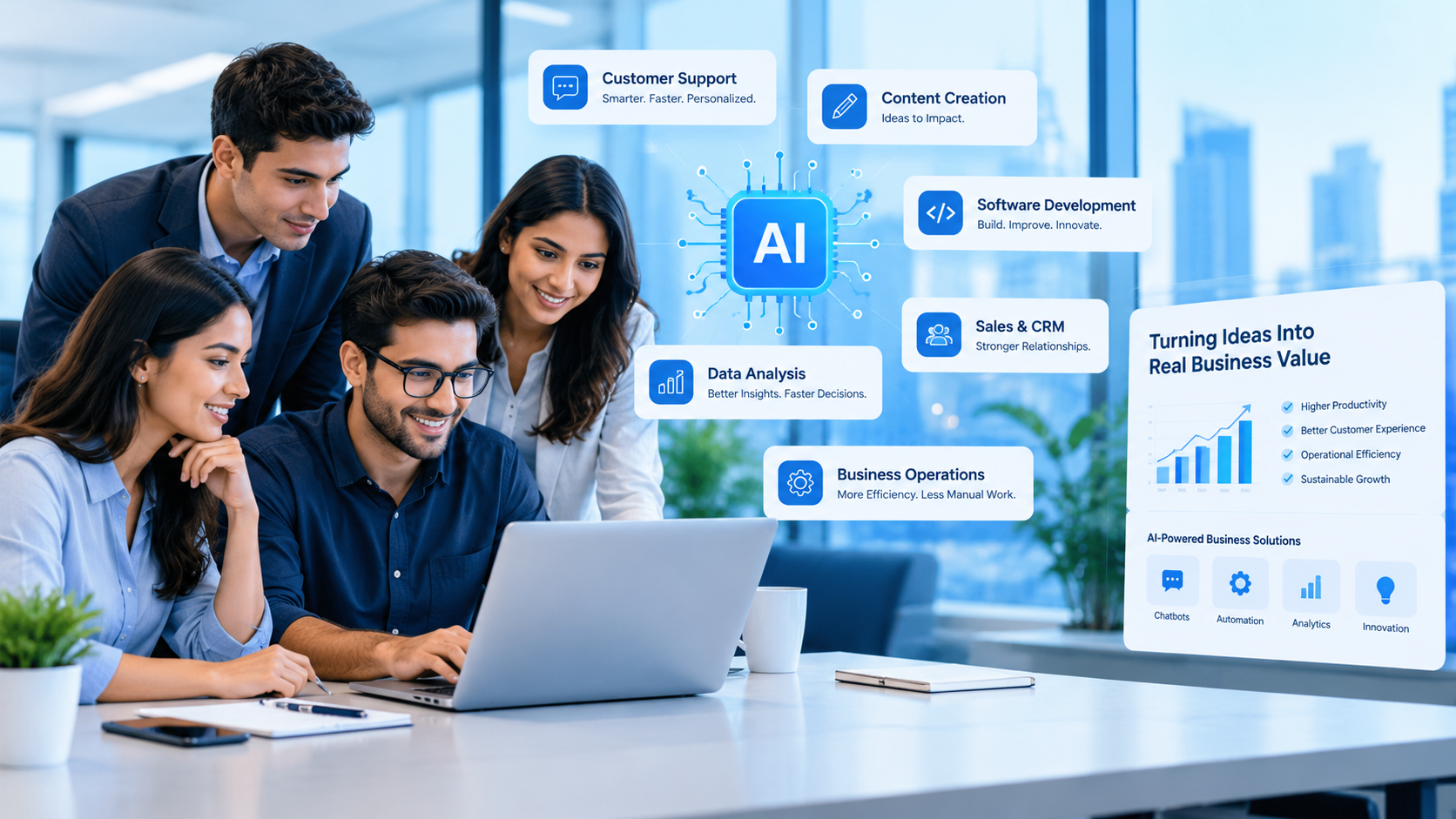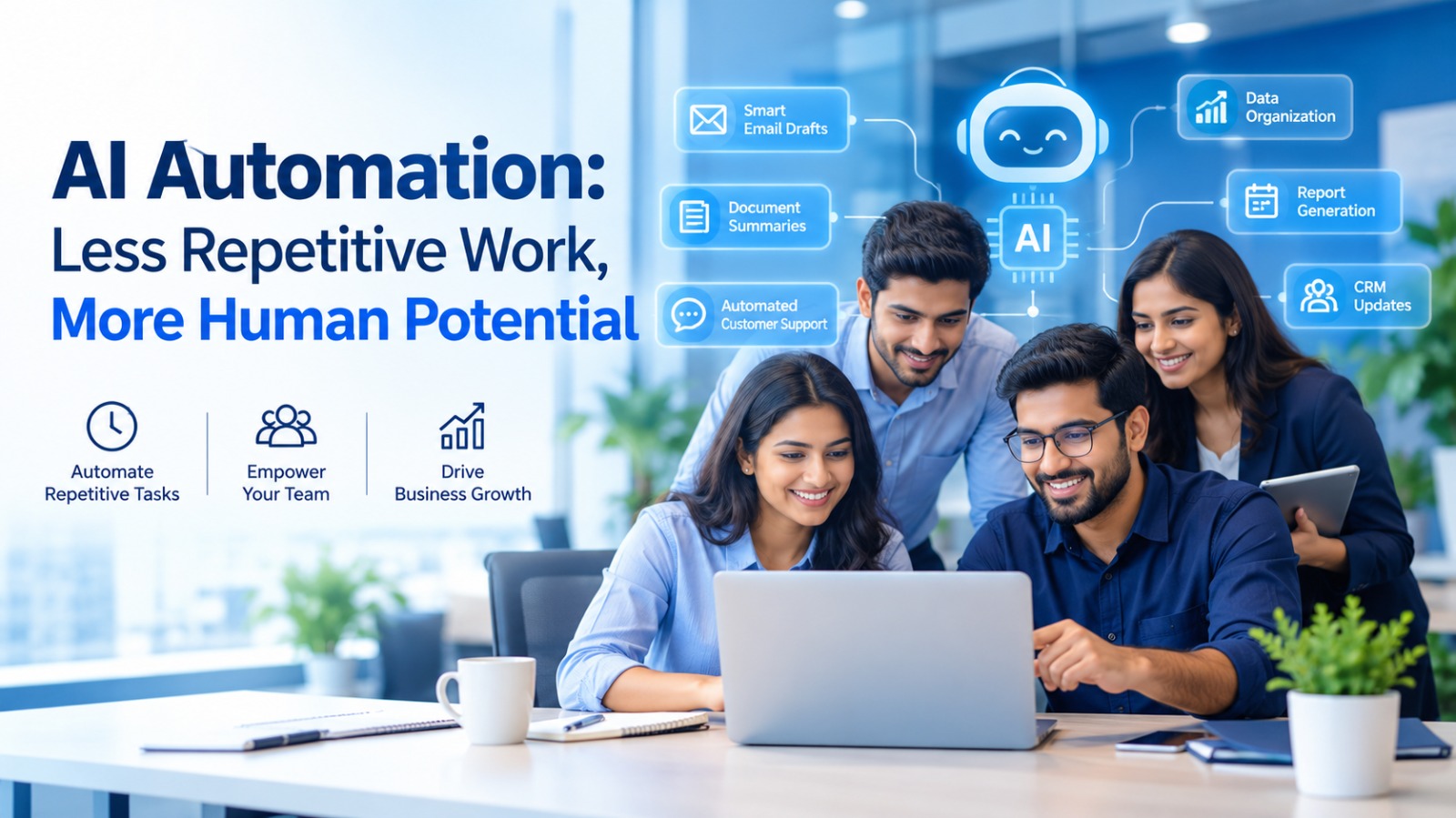

Businesses today operate in an increasingly competitive and technology-driven environment. Managing customer inquiries, scheduling meetings, handling administrative responsibilities, processing information, and maintaining communication can consume significant time and resources. To manage these challenges, organizations are adopting AI-powered virtual assistants to automate routine activities and improve operational efficiency.
AI-powered virtual assistants are transforming how businesses handle everyday tasks by combining artificial intelligence, natural language processing, and machine learning. These intelligent systems can understand user requests, provide relevant responses, manage workflows, and assist employees with different operational responsibilities.
From startups and small businesses to large enterprises, AI assistants are becoming valuable tools for improving productivity, reducing manual workloads, and creating more efficient business processes.
What Are AI-Powered Virtual Assistants?
AI-powered virtual assistants are intelligent software applications designed to interact with users, understand instructions, and perform specific tasks using artificial intelligence technologies.
Unlike traditional automated systems that follow fixed commands, modern AI assistants can understand natural language, recognize user intent, analyze information, and generate contextual responses.
Businesses can use these assistants for activities such as:
-
Answering customer questions.
-
Managing appointments and meeting schedules.
-
Responding to emails and messages.
-
Organizing business information.
-
Supporting sales and marketing activities.
-
Automating repetitive administrative tasks.
-
Assisting employees with internal queries.
These capabilities allow organizations to simplify everyday operations while enabling employees to concentrate on more strategic responsibilities.
1. Automating Repetitive Administrative Tasks
Administrative work is an essential part of every business, but many routine activities require considerable time and attention. Tasks such as data entry, appointment scheduling, document organization, email responses, and information management can reduce the time employees have available for important projects.
AI-powered virtual assistants help automate these repetitive responsibilities.
For example, an AI assistant can schedule meetings, send appointment reminders, organize incoming requests, prepare basic reports, and manage routine communication. Businesses can also integrate AI assistants with existing software to automate workflows across different departments.
By reducing manual involvement in routine activities, organizations can improve productivity, minimize human errors, and maintain smoother operations.
2. Improving Customer Support and Communication
Customer experience plays an important role in business growth. Customers expect quick responses, accurate information, and convenient communication whenever they interact with a company.
Traditional customer support teams may struggle to manage large volumes of inquiries, particularly during busy periods.
AI-powered virtual assistants help businesses address this challenge by providing automated customer support through websites, messaging platforms, and other digital communication channels.
They can:
-
Answer frequently asked questions.
-
Provide product and service information.
-
Assist customers with basic troubleshooting.
-
Guide users through purchasing processes.
-
Share order and service updates.
-
Direct complex inquiries to human representatives.
AI assistants can also provide support outside regular business hours, helping companies remain accessible to customers around the clock.
However, complex complaints and sensitive customer concerns should still be handled by trained human employees.
3. Streamlining Sales and Lead Management
Managing potential customers requires consistent communication, timely follow-ups, and proper organization of lead information.
AI-powered virtual assistants can support sales teams by automating several stages of the lead management process.
For instance, an AI assistant integrated with a Customer Relationship Management (CRM) system can help capture inquiries, organize prospect information, identify potential customer requirements, and schedule follow-up activities.
It can also assist sales representatives by preparing meeting summaries, drafting personalized email responses, and identifying leads that require immediate attention.
These capabilities help sales teams spend less time on administrative responsibilities and more time building customer relationships.
When combined with CRM automation, AI assistants can create a more organized and responsive sales process.
4. Enhancing Employee Productivity
Employees frequently spend a considerable portion of their working hours searching for information, managing schedules, preparing documents, and responding to internal requests.
AI-powered virtual assistants can reduce these interruptions by acting as digital workplace support systems.
Employees can use AI assistants to:
-
Find relevant company information.
-
Summarize lengthy documents.
-
Prepare meeting agendas.
-
Draft professional emails.
-
Organize daily responsibilities.
-
Generate reports and summaries.
-
Receive assistance with routine questions.
This improves access to information and allows employees to complete everyday responsibilities more efficiently.
AI assistants do not replace employee expertise. Instead, they provide additional support that helps teams work more effectively.
5. Supporting Data Analysis and Business Decisions
Business decisions increasingly depend on accurate information and timely insights. However, analyzing large volumes of business data manually can be challenging.
AI-powered virtual assistants can help organizations interpret information, summarize reports, identify patterns, and present relevant insights.
For example, businesses can use AI assistants to examine sales performance, summarize customer feedback, review marketing campaign results, and identify operational trends.
When connected to approved business databases and analytics platforms, these systems can make important information easier to access.
Managers can use these insights to understand business performance, recognize potential challenges, and make more informed decisions.
It is important to verify AI-generated insights against reliable business data before using them for important decisions.
6. Reducing Operational Costs
Managing business operations involves expenses related to staffing, administration, customer support, communication, and repetitive manual processes.
AI-powered virtual assistants can help control some of these expenses by automating routine activities and improving resource utilization.
For example, an organization may use an AI assistant to handle frequently asked customer questions, schedule appointments, organize information, and support internal communication.
This can reduce the amount of manual work required for certain processes and allow employees to focus on higher-value activities.
However, implementing AI technology also involves expenses such as software subscriptions, integration, employee training, and maintenance. Businesses should evaluate the overall return on investment rather than assuming that automation automatically reduces costs.
7. Personalizing Customer Experiences
Modern customers expect businesses to understand their preferences and provide relevant recommendations.
AI-powered virtual assistants can help personalize interactions by analyzing available customer information, previous interactions, stated preferences, and purchasing patterns.
For example, an online retail business can use an AI assistant to recommend products based on customer interests. Similarly, a service-based company can provide relevant information based on a customer's previous inquiries or service requirements.
When connected to a CRM platform, AI assistants can access authorized customer information and help employees deliver more personalized communication.
Businesses must ensure that customer information is collected and used responsibly, with appropriate privacy protections and access controls.
8. Integrating AI Assistants with Existing Business Software
The effectiveness of AI-powered virtual assistants increases when they work alongside the tools businesses already use.
Organizations can integrate AI assistants with platforms such as:
-
Customer Relationship Management (CRM) systems.
-
Enterprise Resource Planning (ERP) software.
-
Email and communication platforms.
-
Project management applications.
-
Customer support systems.
-
Business analytics tools.
-
Appointment scheduling software.
These integrations help connect different business processes and reduce the need to switch between multiple applications.
For example, an AI assistant connected to a CRM platform can retrieve authorized customer details, summarize interactions, and help sales representatives prepare follow-up messages.
Such integrations create a more connected business environment where information can move between departments more efficiently.
9. Improving Business Scalability
As businesses grow, their operational requirements also increase. More customers mean additional inquiries, larger volumes of information, and greater administrative responsibilities.
AI-powered virtual assistants can help businesses manage increasing workloads without requiring every routine process to be handled manually.
For startups and small businesses, AI assistants can provide access to automation capabilities that were previously difficult to implement without larger operational teams.
Growing organizations can gradually expand their AI capabilities by introducing automation into customer service, sales, marketing, administration, and internal communication.
This flexibility makes AI assistants valuable for businesses looking to improve operational efficiency while preparing for future growth.
Challenges Businesses Should Consider Before Implementing AI Assistants
Although AI-powered virtual assistants offer several advantages, their implementation requires careful planning.
Some important challenges include:
1. Data Privacy and Security: AI assistants may process sensitive business and customer information. Organizations must establish appropriate security measures, access permissions, and data protection policies.
2. Accuracy and Reliability: AI-generated responses may sometimes contain incorrect or incomplete information. Businesses should introduce human review for important decisions and customer interactions.
3. Integration Complexity: Connecting AI assistants with existing software may require technical expertise, system configuration, and additional investment.
4. Employee Training: Employees need to understand how to use AI tools effectively and when human judgment is necessary.
5. Dependence on Automation: Businesses should avoid automating every interaction. Human support remains important for complex situations, sensitive conversations, and relationship-based decisions.
Addressing these challenges can help organizations implement AI assistants more responsibly and achieve better long-term results.
How Businesses Can Get Started with AI-Powered Virtual Assistants
Organizations do not need to automate every department immediately. A gradual implementation strategy can make the transition easier.
Here are some practical steps:
-
Identify Repetitive Tasks: Evaluate daily business activities and identify processes that consume unnecessary time.
-
Choose the Right AI Solution: Select an assistant based on business requirements, available features, security, and integration capabilities.
-
Start with a Specific Department: Introduce AI automation in one area, such as customer support, sales administration, or appointment scheduling.
-
Integrate Existing Systems: Connect the assistant with relevant business applications where appropriate.
-
Train Employees: Help employees understand the technology and its practical applications.
-
Monitor Performance: Evaluate response accuracy, time savings, customer satisfaction, and overall operational improvements.
-
Expand Gradually: Introduce additional AI-powered workflows based on performance and business requirements.
A well-planned approach allows organizations to understand the practical value of AI before expanding its use across the business.
The Future of AI-Powered Virtual Assistants in Business
The role of AI-powered virtual assistants is expected to expand as artificial intelligence technologies become more advanced.
Future assistants are likely to support increasingly complex workflows, interact with multiple business applications, provide more contextual recommendations, and coordinate tasks across departments.
The development of AI agents is also creating opportunities for systems that can perform multi-step tasks with varying levels of human supervision.
Businesses may increasingly use these technologies to coordinate sales activities, manage customer interactions, support project workflows, and organize internal operations.
Nevertheless, successful adoption will depend on responsible implementation, reliable data, appropriate human oversight, and clear business objectives.
Conclusion
AI-powered virtual assistants are changing business operations by making everyday activities more efficient, improving customer communication, supporting employees, and simplifying complex workflows.
From automating administrative responsibilities to assisting with sales management and business analysis, these intelligent tools are helping organizations create more connected and productive working environments.
For businesses looking to remain competitive, adopting AI-powered virtual assistants can be a valuable step toward digital transformation. The most successful organizations will be those that combine intelligent automation with human expertise, responsible data management, and a clear understanding of their operational needs.
AI is not simply changing how businesses complete tasks; it is changing how businesses organize, manage, and scale their operations.