Customer support is an essential part of every successful business, but for small businesses, managing customer queries can quickly become time-consuming. Small teams often have to handle customer emails, website messages, social media inquiries, order-related questions, complaints, and technical issues while also managing daily business operations. As customer interactions increase, responding to every question manually can lead to slower response times and an increased workload for employees. This is where AI chatbots can help small businesses create faster and more efficient customer support systems.
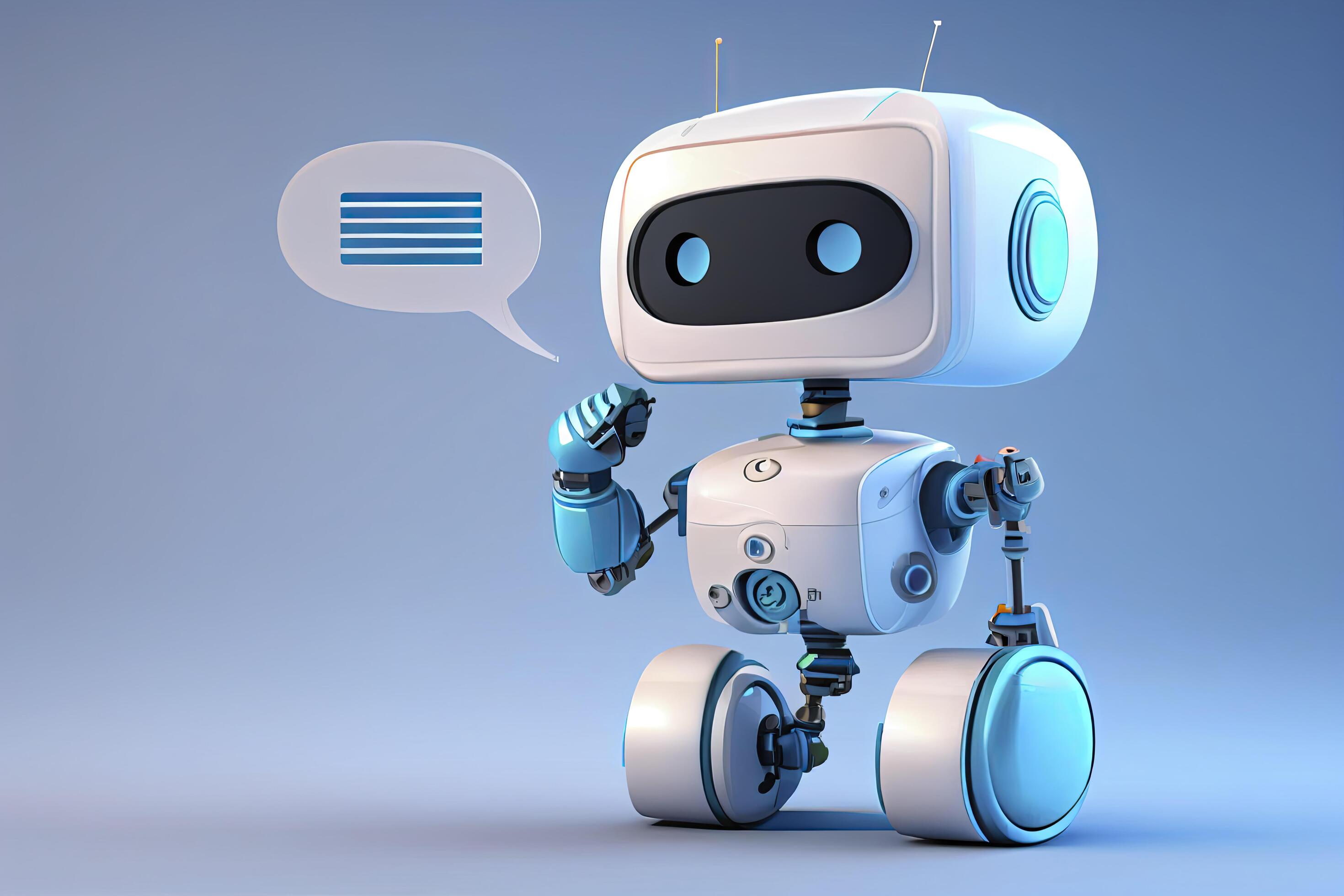
AI chatbots for customer support are software applications that use artificial intelligence to communicate with customers and provide automated responses. Modern AI chatbots can understand natural-language questions and respond based on information about a company's products, services, policies, and frequently asked questions. Instead of requiring an employee to answer every basic question, a chatbot can instantly provide customers with relevant information. When implemented effectively, this can potentially reduce the time employees spend handling repetitive customer-support tasks by up to 50%, although actual results depend on the business and the level of automation.
Why Small Businesses Need AI-Powered Customer Support
Customer support can consume a significant amount of time because many customer questions are repetitive. An e-commerce business may repeatedly receive questions about shipping, returns, product availability, and order tracking. A software company may receive similar questions about account access, password resets, and troubleshooting. A service-based business may regularly answer questions about prices, appointment availability, and service locations.
Although each individual question may take only a few minutes to answer, the total amount of time spent on repetitive queries can become substantial. Employees may spend hours every week providing information that could potentially be automated. AI chatbots allow businesses to handle these routine conversations automatically, giving employees more time to focus on complex customer issues and other important business activities.
How AI Chatbots Reduce Customer Support Times
One of the simplest ways AI chatbots can reduce customer-support workload is by answering frequently asked questions. Businesses can identify the questions customers ask most often and provide accurate answers through their chatbot. Questions about business hours, pricing, delivery, payment methods, product information, refund policies, and appointment procedures can often be handled automatically.
For example, an online store may receive dozens of messages asking, “Where is my order?” Instead of requiring an employee to respond to each customer individually, an AI chatbot can provide information about order tracking when the appropriate systems are connected. Similarly, a service business could use a chatbot to answer questions about opening hours, service availability, and appointment procedures. Automating these repetitive interactions can significantly reduce the amount of manual work required from customer-support teams.
Providing 24/7 Customer Support
Another major advantage of AI chatbots is their ability to provide support outside normal business hours. Small businesses may not have the resources to maintain customer-support teams throughout the day and night. However, customers can have questions at any time, including evenings, weekends, and holidays.
An AI chatbot can provide immediate responses even when employees are unavailable. It can answer basic questions, provide relevant information, collect customer details, and record support requests for employees to handle later. This allows businesses to maintain a level of customer support outside working hours without requiring a full-time team to be available around the clock.
Reducing Customer Response and Resolution Times
Customers generally expect businesses to respond quickly when they have a question or problem. Delayed responses can result in repeated messages, unnecessary follow-ups, and a frustrating customer experience. AI chatbots can respond to many common questions within seconds, eliminating the waiting period associated with manual responses.
Chatbots can also reduce resolution times by collecting relevant information before transferring an issue to a human employee. For example, if a customer has a problem with an order, the chatbot can ask for the order number and identify the nature of the problem. When the conversation is transferred to an employee, the agent already has the necessary information and does not need to start the conversation from the beginning.
Automating Basic Troubleshooting
Small businesses that provide software, technology, electronics, or other technical services can use AI chatbots to automate basic troubleshooting. Customers can describe their problems to the chatbot, which can then guide them through predefined troubleshooting steps.
For example, if a customer cannot access an account, the chatbot can provide instructions for resetting a password or checking account details. If the problem cannot be resolved through automated guidance, the chatbot can escalate the conversation to a human support representative. This approach allows employees to focus on more complicated technical issues rather than spending time on simple and repetitive problems.
Using AI Chatbots for Customer Qualification
AI chatbots can also help businesses understand customer requirements before connecting them with an employee. A chatbot can ask customers a series of questions to determine what they need and then route the conversation to the appropriate department or employee.
For example, a digital agency could ask a website visitor whether they are interested in website development, mobile app development, SEO, or digital marketing services. Based on the customer's response, the chatbot can collect additional information and direct the lead to the appropriate sales representative. This reduces unnecessary back-and-forth communication and helps employees begin conversations with better context.
How Small Businesses Can Work Toward a 50% Reduction in Support Time
Reducing customer-support time by 50% should not be viewed as an automatic outcome of installing an AI chatbot. Businesses need to identify the areas where automation can provide the greatest benefit. The first step is to analyze existing customer-support conversations and identify the questions employees answer repeatedly.
Once these questions have been identified, businesses can determine which tasks are suitable for automation. Simple and predictable requests are generally easier to automate than complicated complaints or situations requiring human judgment. Businesses can begin with frequently asked questions, order information, appointment requests, product details, and basic troubleshooting before gradually introducing more advanced automation.
A reliable knowledge base is also essential for successful chatbot implementation. Businesses should provide the chatbot with accurate and updated information about products, services, pricing, policies, delivery, refunds, business hours, and other important topics. If the information given to the chatbot is outdated or incorrect, customers may receive inaccurate responses, which can negatively affect their experience.
Connecting AI Chatbots With Business Systems
The effectiveness of an AI chatbot can increase significantly when it is connected to relevant business systems. Depending on the business, a chatbot can potentially be integrated with CRM software, customer databases, order-management platforms, appointment systems, ticketing platforms, and other tools.
For example, instead of simply explaining how customers can track an order, an integrated chatbot could potentially retrieve relevant order information and provide the customer with an update. Similarly, a service business could allow customers to check appointment information or submit service requests through an automated conversation. These integrations reduce the need for employees to manually search for information and can make customer support more efficient.
AI Chatbots Should Work Alongside Human Employees
Although AI chatbots can automate many customer-service tasks, businesses should not attempt to automate every interaction. Some customer issues require human judgment, empathy, negotiation, or specialized knowledge. Customers should always have a clear way to contact a human representative when the chatbot cannot resolve their problem.
A strong customer-support strategy combines AI automation with human assistance. The chatbot can handle repetitive and straightforward questions while human employees deal with complex complaints, unusual situations, sensitive issues, and customers who require personalized assistance. This approach allows businesses to use automation without losing the human element of customer service.
Personalizing Customer Support With AI
AI chatbots can also help businesses deliver more personalized customer interactions. Generic responses may be sufficient for simple questions, but customers often need information specific to their situation. When a chatbot is properly integrated with business systems and has appropriate access to relevant information, it can provide more contextual responses.
For example, an e-commerce chatbot could potentially help a customer with information related to a particular order, while a service business could use chatbot conversations to understand what type of service a customer is looking for. Personalized interactions can reduce unnecessary conversations and help customers reach solutions faster.
AI Chatbots Can Improve Sales as Well as Support
AI chatbots are not limited to customer-service operations. Small businesses can also use them to support sales and lead generation. A chatbot on a business website can answer questions about products and services, help visitors understand pricing, recommend relevant options, collect contact information, and schedule consultations.
This makes AI chatbots useful across multiple stages of the customer journey. A visitor who arrives on a website with a question does not necessarily need to wait for a sales representative. The chatbot can provide initial information and collect details before connecting the visitor with a member of the sales team.
Common AI Chatbot Mistakes Small Businesses Should Avoid
Small businesses should avoid implementing AI chatbots without first defining a clear purpose. Simply placing a chatbot on a website does not automatically improve customer support. Businesses should identify specific problems they want the chatbot to solve and determine how success will be measured.
Another common mistake is failing to update chatbot information. Products, prices, policies, services, and business processes can change over time. If the chatbot continues providing outdated information, customers may lose confidence in the business. Regular monitoring and updates are therefore essential.
Businesses should also avoid making it difficult for customers to reach human support. If a customer repeatedly receives irrelevant automated responses, the experience can become frustrating. A well-designed chatbot should recognize when it cannot provide a suitable answer and provide an easy path to human assistance.
Measuring the Success of AI Customer Support
Businesses should measure their customer-support performance before and after implementing an AI chatbot. Important metrics include average response time, resolution time, number of conversations handled automatically, percentage of conversations escalated to human employees, customer satisfaction, and employee workload.
These measurements help businesses understand whether automation is actually saving time. For example, if employees previously spent 100 hours every month answering repetitive questions and automation reduces that workload substantially, the business can calculate the actual time saved. This data can then be used to improve the chatbot and identify additional opportunities for automation.
The Future of AI Chatbots for Small Businesses
AI-powered customer support is becoming an increasingly important part of digital transformation. Advances in conversational AI, natural-language processing, automation, and business-system integrations are making sophisticated customer-support capabilities more accessible to smaller businesses.
For small businesses, the goal should not simply be to replace human employees with AI. Instead, AI can be used to remove repetitive tasks from employees' workloads and allow them to focus on activities that require human judgment and relationship-building. This can help businesses improve efficiency while continuing to provide personalized customer experiences.
Conclusion
AI chatbots can help small businesses transform customer support by automating repetitive questions, providing instant responses, handling basic troubleshooting, collecting customer information, and routing complex issues to human employees. With the right implementation, businesses can potentially achieve significant reductions in the time spent on routine support activities.
However, a 50% reduction should be treated as a potential operational target rather than a guaranteed result. The actual impact depends on factors such as customer-support volume, the quality of the chatbot's knowledge base, the number of tasks that can be automated, business-system integrations, and the effectiveness of human escalation.
For small businesses looking to improve customer service without dramatically increasing their support workload, AI chatbot development can provide a practical path toward faster, more scalable, and more efficient customer support. By combining AI automation with human expertise, businesses can reduce repetitive work while giving customers quicker and more convenient access to support.
To know more kindly visit: Devobyte