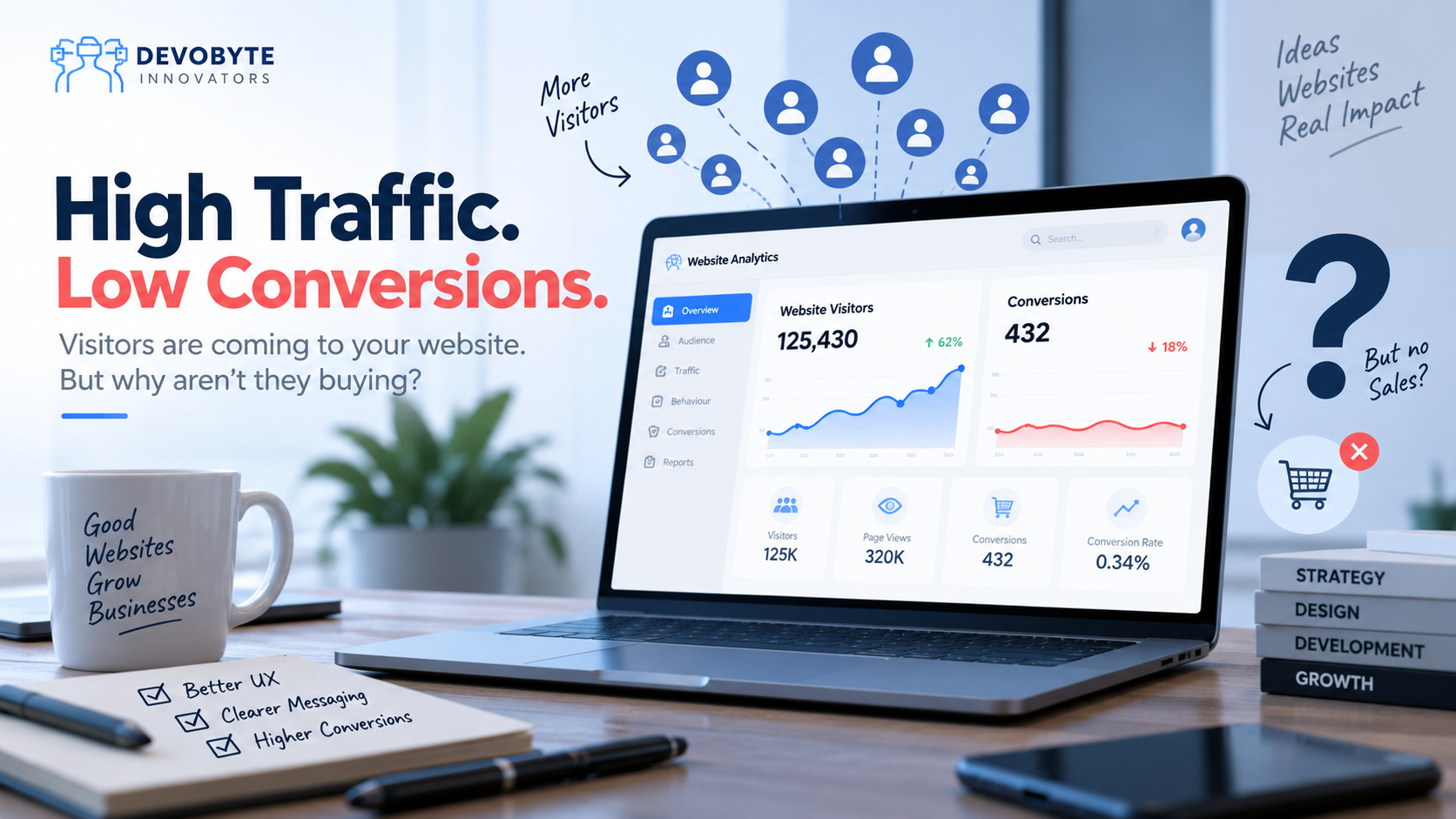
Getting people to visit your website is an important first step, but traffic alone does not guarantee business growth. You may have hundreds or even thousands of visitors every month, yet receive very few enquiries, sign-ups, or purchases. This can be confusing for business owners because the numbers suggest that people are interested. The real question is what happens after they arrive. A successful website is not just designed to attract visitors; it should also guide those visitors toward taking meaningful action.
One of the most common reasons a website fails to convert is that visitors cannot immediately understand what the business offers. When someone lands on a website, they should be able to quickly understand what the company does, who it serves, and how it can help them. If the homepage is filled with complicated language, vague statements, or too much information, visitors may leave before exploring further. Clear headlines, simple explanations, and relevant visuals can help communicate the value of a product or service within seconds.
Trust is another major factor in converting visitors into customers. People are naturally cautious when they are considering spending money or sharing their information online. A website without testimonials, client information, reviews, case studies, certifications, or clear contact details may make visitors hesitate. Even if the product or service is good, a lack of visible credibility can prevent someone from taking the next step. Businesses can build trust by showing real customer experiences, displaying relevant credentials, providing transparent information, and maintaining a professional online presence.
Another problem could be an unclear call to action. A visitor might be interested in your service but still leave because they do not know what to do next. Buttons such as “Contact Us,” “Get a Quote,” “Book a Consultation,” or “Start Your Project” give visitors a clear direction. The important thing is that the action should match the visitor's intent. A business website should make it easy for someone to move from learning about a service to enquiring about it without having to search through multiple pages.
The number of steps required to complete an action can also affect conversions. Imagine a potential customer wants to contact a business, but the website asks them to create an account, fill out a long form, verify their email, and then provide additional information before submitting an enquiry. The more unnecessary steps there are, the greater the chance that the visitor will abandon the process. Forms and checkout processes should ask only for information that is genuinely required. A simple and convenient customer journey can make a significant difference.
Website performance and user experience also play an important role. Visitors expect websites to load quickly and work smoothly across devices. A slow website, broken link, confusing navigation, or poorly designed mobile experience can frustrate users and cause them to leave. This becomes even more important when people are accessing a website from smartphones. A website may look impressive on a desktop but still lose potential customers if its mobile experience is difficult to use. Regular performance checks and responsive design can help businesses create a smoother experience.
The content on your website also needs to focus on the customer's needs. Businesses sometimes spend too much time explaining who they are and what they do without explaining why it matters to the customer. Instead of simply saying that a company provides web development services, for example, the content can explain how those services can help a business improve its online presence, reach customers, streamline processes, or create a better user experience. When visitors can connect a service with a problem they are trying to solve, they have a clearer reason to continue exploring.
There is also a possibility that the website is attracting the wrong type of traffic. High visitor numbers do not necessarily mean high-quality visitors. Someone may arrive through a search result, advertisement, or social media post because the topic looked interesting, but that does not mean they are actually looking for the product or service being offered. Businesses should look beyond the total number of visitors and understand where their traffic is coming from, what pages people visit, how long they stay, and which actions they take. This can reveal whether the website is reaching potential customers or simply generating visits.
Understanding website analytics can help identify where the customer journey is breaking down. For example, if a large number of visitors leave from the homepage, the messaging or user experience may need attention. If visitors reach a product or service page but rarely click the enquiry button, the call to action or page content may need improvement. Analytics should therefore be used not only to measure traffic but also to understand visitor behaviour and identify opportunities for improvement.
Ultimately, website traffic is only one part of the digital customer journey. The real value comes from turning relevant visitors into people who engage with the business, make enquiries, sign up, or become customers. A website should combine clear messaging, trust, useful content, intuitive navigation, strong calls to action, good performance, and a simple user experience. If your website is receiving traffic but not generating the results you expect, the solution may not be to simply attract more visitors. Sometimes, the bigger opportunity is to understand the visitors you already have and create a website experience that gives them a clear reason to take the next step.