Every growing business eventually faces an important technology decision: should we build our own software or buy an existing solution? At first, purchasing ready-made software may seem like the obvious choice. It is usually faster to implement, easier to get started with, and often requires less technical expertise. But as a business grows, an off-the-shelf solution may not always fit the way the company operates. This is where custom software development becomes worth considering.
The real question is not whether custom software is better than ready-made software. The better question is which option fits the business's current needs, budget, processes, and long-term goals? Making the right choice requires looking beyond the initial price and considering factors such as flexibility, scalability, security, integration, maintenance, and the amount of control the business needs.
What Does “Buy” Mean?
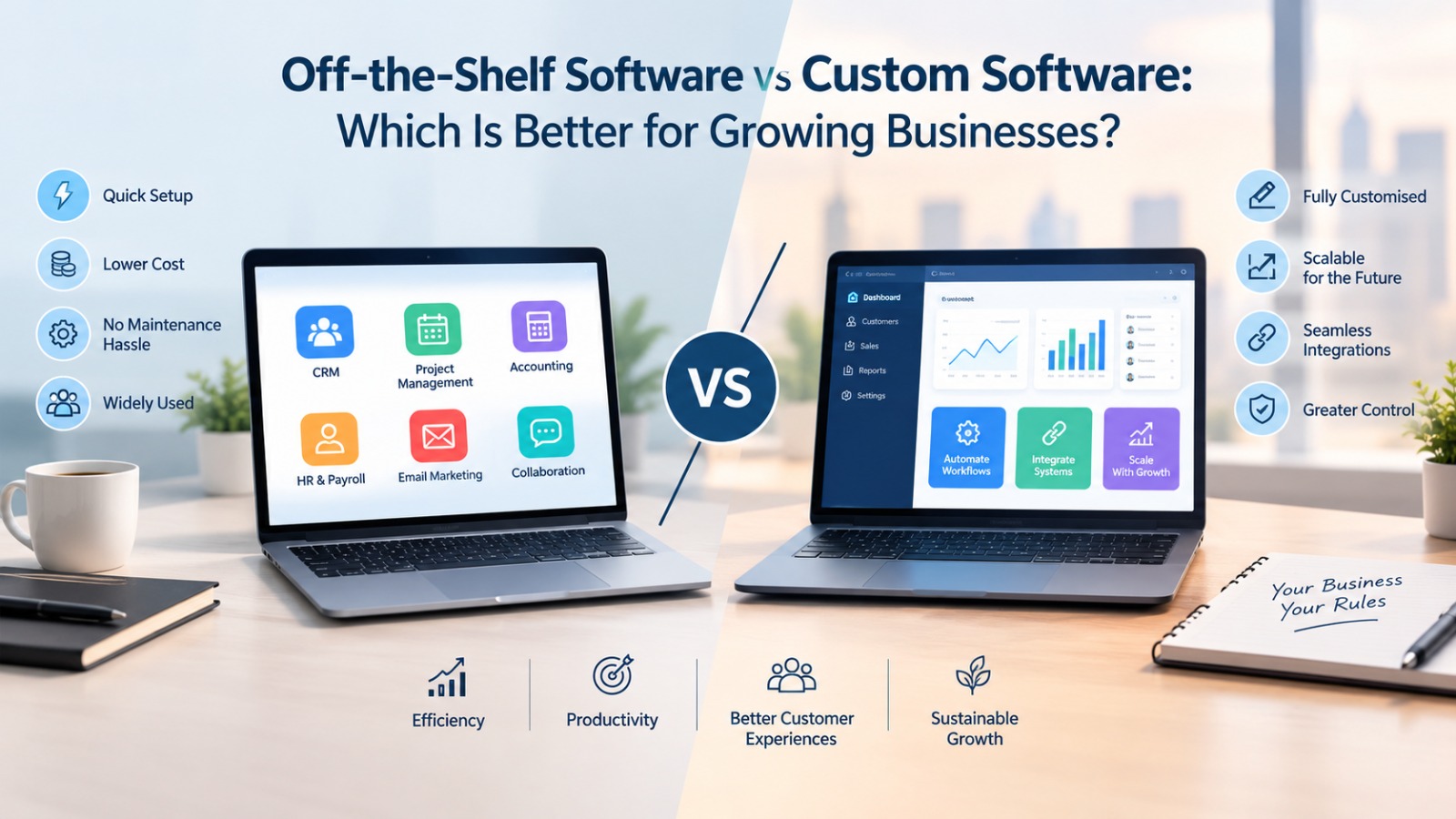
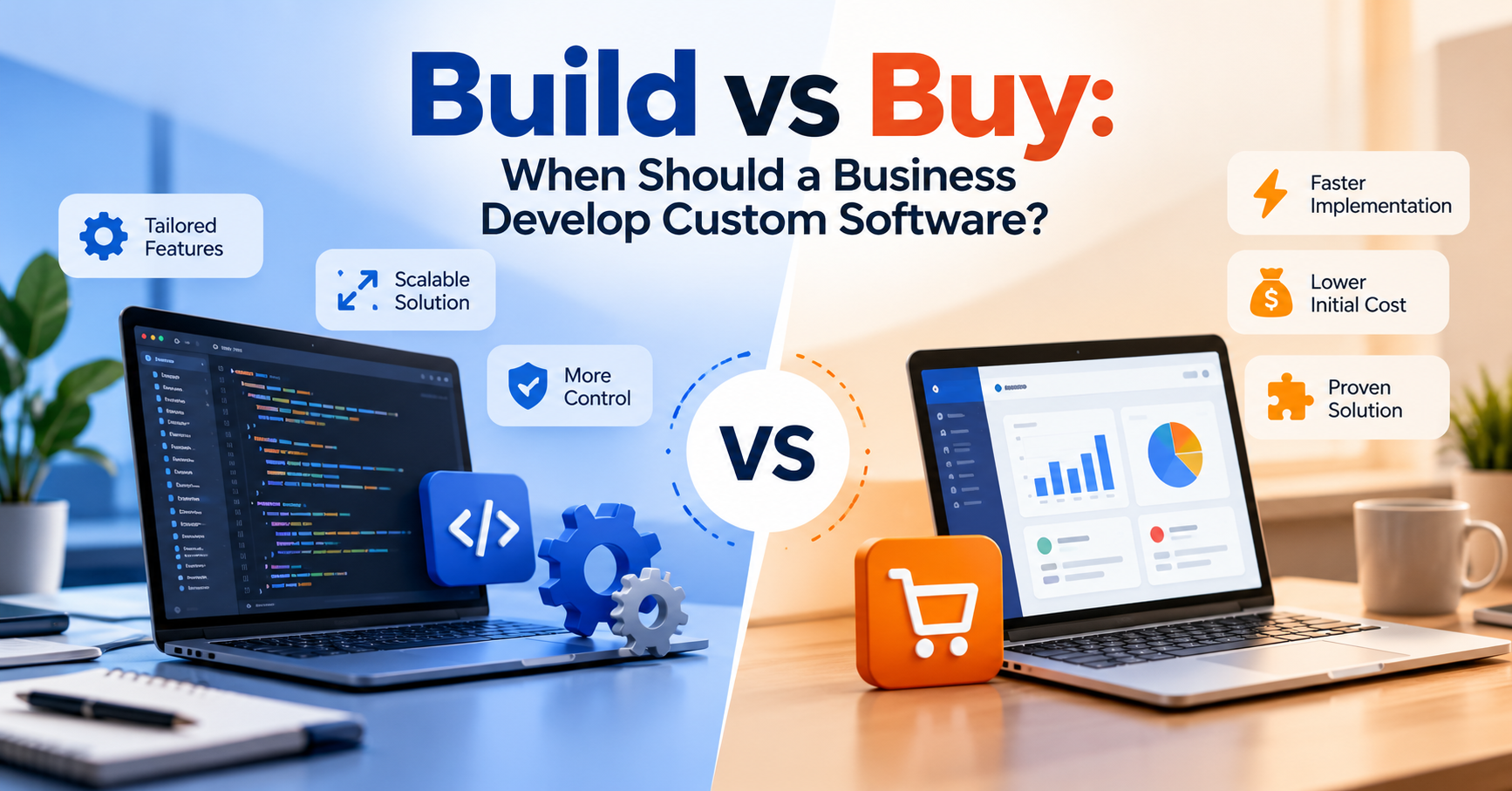
Buying software means choosing an existing product that has already been developed by a software company. These solutions are designed to serve a broad range of businesses and usually come with features that can be enabled or configured according to the customer's requirements. Examples include accounting software, customer relationship management systems, project management platforms, communication tools, and human resource management systems.
The biggest advantage of buying software is speed. A business can usually subscribe, configure the required settings, train employees, and start using the system without waiting months for development. The provider also handles updates, bug fixes, security improvements, and infrastructure in many cases. For businesses with common and well-defined requirements, this can make an existing solution a practical option.
However, ready-made software is designed for many customers rather than one specific organization. A business may therefore have to adjust some of its processes to match the software. It may also end up paying for features it does not use or discovering that an important feature is unavailable without additional customization.
What Does “Build” Mean?
Building software means developing a solution specifically for a business's requirements. Instead of adapting the business to an existing product, the software is designed around the organization's workflows, users, data, and objectives.
Custom software can be particularly useful when a company has unique processes that existing solutions cannot handle effectively. For example, a logistics company may require a specialized system for managing its particular delivery workflow, while a manufacturing business may need software that connects production, inventory, quality control, and reporting in a way that standard software cannot easily support.
The major advantage of custom development is flexibility. The business has greater control over the features, user experience, integrations, data flow, and future improvements. As the organization changes, the software can also be developed further to support new requirements.
Cost Is More Than the Initial Price
One of the first things businesses consider when comparing build and buy is cost. A ready-made solution may have a lower initial cost because the development has already been completed and the expense is distributed among many customers. However, businesses should also consider subscription fees, additional users, premium features, integrations, migration costs, and customization charges.
Custom software usually requires a larger investment at the beginning because the solution has to be planned, designed, developed, tested, and deployed specifically for the organization. However, the financial picture should be considered over the software's expected lifespan rather than only looking at the initial development cost.
For this reason, businesses should calculate the total cost of ownership. This includes development or subscription costs, maintenance, infrastructure, upgrades, employee training, integrations, and other ongoing expenses. A cheaper option at the beginning is not necessarily the most suitable option over several years.
Flexibility and Customization
Flexibility is one of the biggest differences between buying and building software. Ready-made software generally offers a predefined set of features and configuration options. Some products offer extensive customization, but there are usually limits to what users can change.
Custom software, on the other hand, can be designed around specific business processes. If a company has a unique approval workflow, reporting requirement, customer journey, or internal process, those requirements can be incorporated into the system from the beginning.
This does not mean every unique requirement justifies custom development. Businesses should first determine whether the difference is genuinely important to their operations or whether a small change in their existing process would solve the problem.
Scalability Should Be Considered Early
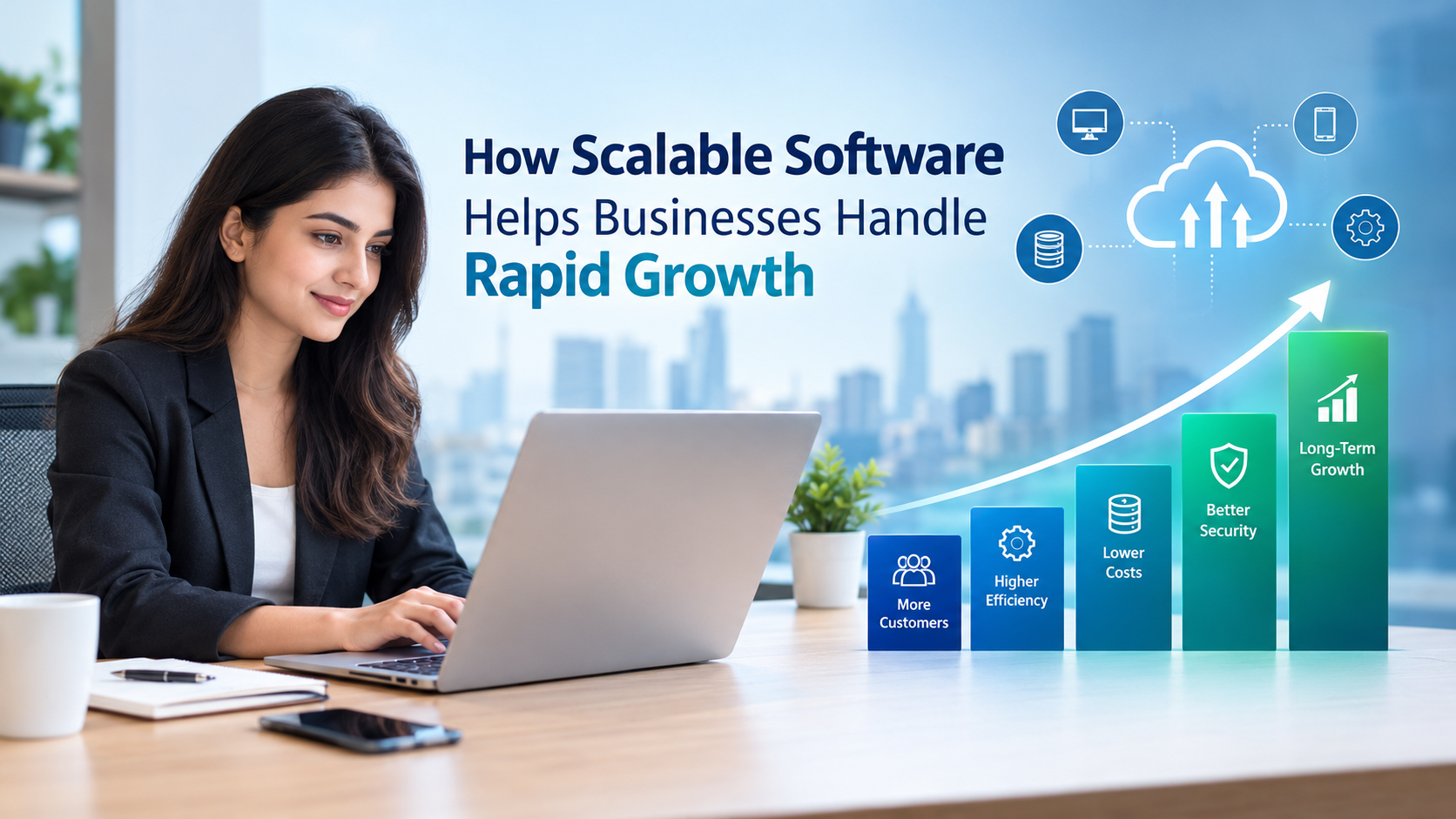
A software solution that works for a company today may not necessarily work when the company doubles or triples in size. As the number of employees, customers, transactions, locations, or products increases, software may need to handle a larger workload.
Many established software products are designed to support different business sizes and can scale through higher plans or additional infrastructure. Custom software can also be designed with future growth in mind, allowing businesses to build the architecture around their expected requirements.
The important point is to think beyond the current situation. Before choosing a solution, businesses should ask: Will this software still support us two or five years from now?
Integration Can Change the Decision
Modern businesses rarely use just one software system. A company may use separate platforms for accounting, sales, customer support, inventory, marketing, human resources, and communication. These systems need to exchange information to avoid repetitive data entry and disconnected workflows.
If an existing software product integrates easily with the tools a business already uses, buying may be sufficient. However, if the organization needs several specialized integrations or has a complex data flow between systems, custom software may provide greater control over how these systems communicate.
APIs and other integration technologies can help connect different applications, but the availability and quality of integrations should be checked before selecting a solution.
Security and Data Control
Data is another important consideration. Businesses may handle customer information, financial records, employee information, business documents, or other sensitive data through their software systems.
With ready-made software, businesses depend on the provider's security practices, infrastructure, access controls, and policies. This does not automatically make purchased software less secure, but organizations should understand how their data is stored, protected, accessed, and managed.
With custom software, businesses can define security requirements around their particular workflows and infrastructure. However, custom development also creates responsibility for maintaining those security measures. Building software does not automatically make it secure; security needs to be considered throughout development, deployment, and maintenance.
Maintenance Is Part of the Decision
Building software does not end when the application is launched. Custom software requires ongoing maintenance, security updates, bug fixes, performance improvements, backups, monitoring, and future development.
Ready-made software generally shifts much of this responsibility to the software provider. The provider manages updates and infrastructure while the business uses the product as a service.
This difference is important for businesses that do not have an internal technical team. Before choosing custom development, the organization should have a clear plan for who will maintain the software after launch.
When Should a Business Consider Buying?
Buying an existing solution can make sense when the business has standard requirements, needs software quickly, and can find a product that already provides most of the required functionality. It can also be suitable when the company does not want to manage software development and maintenance internally.
For example, if a small business simply needs accounting, employee attendance, email marketing, or project management capabilities, there may be little reason to develop an entirely new system when established solutions already exist.
When Should a Business Consider Building?
Custom development becomes more relevant when the business has specialized workflows, needs extensive integrations, requires greater control over functionality, or expects its software requirements to evolve significantly over time.
It can also be considered when existing products force employees to use inefficient workarounds, require too many separate systems, or cannot support an important business process. In these situations, custom software can be designed to solve the specific problem rather than asking the business to work around the limitations of a standard product.
Build vs Buy Is a Business Decision, Not Just a Technology Decision
The build-versus-buy decision should involve more than the IT team. Business leaders, finance teams, operations teams, and the people who will actually use the software should all have a voice in the decision.
A useful approach is to first document the business requirements, identify the problems that need to be solved, research existing solutions, calculate the expected total cost, and then determine whether customization or completely new development is necessary.
Sometimes the answer may even be a combination of both. A business might purchase an established CRM or accounting platform while developing a custom application that connects those systems and handles its unique internal processes.
Making the Right Choice for Your Business
There is no universal answer to the question of whether a business should build or buy software. The right choice depends on the organization's requirements, budget, timeline, technical resources, security needs, and future plans.
Buy when an existing solution already solves the problem effectively. Build when the business has important requirements that existing solutions cannot adequately address. Most importantly, businesses should avoid developing custom software simply because it sounds more advanced, and they should also avoid buying software simply because it appears cheaper at first.
The goal is not to choose between “build” and “buy.” The goal is to choose a software approach that solves the business problem, supports future growth, and delivers sustainable value over time.