Businesses in almost every industry are investing in software to improve operations, automate repetitive processes, manage customer relationships, analyze data, and deliver better digital experiences. However, one of the first questions businesses ask before starting a software project is: How much does custom software development cost in 2026? There is no single fixed price because the cost depends on the software's complexity, features, technology stack, development team, integrations, security requirements, and long-term maintenance needs.
In 2026, custom software development can range from relatively affordable solutions for small businesses to significantly larger investments for enterprise-grade platforms. Understanding the factors behind software development pricing can help businesses create realistic budgets and avoid unexpected expenses during development. Instead of focusing only on the initial development quotation, businesses should consider the complete cost of designing, developing, testing, launching, securing, and maintaining the software.
What Is Custom Software Development?
Custom software development refers to the process of creating software specifically for the requirements of a particular business, organization, or group of users. Unlike off-the-shelf software, which is designed for a broad audience, custom software is built around specific workflows, business processes, and objectives.
For example, a company may need a customized CRM system, inventory management platform, employee management system, healthcare application, financial dashboard, customer portal, or business automation platform. Custom development allows businesses to decide which features they need rather than paying for a large collection of features that may not be relevant to their operations.
How Much Does Custom Software Development Cost in 2026?
The custom software development cost in 2026 can vary substantially depending on the project's scope. A relatively simple application with basic functionality may require a much smaller budget than a complex enterprise platform involving multiple user roles, real-time data, advanced analytics, artificial intelligence, third-party integrations, and strict security requirements.
A basic custom software project may cost anywhere from $10,000 to $30,000, while a medium-complexity application can commonly fall in the $30,000 to $100,000+ range. More complex enterprise applications can exceed $100,000 and potentially reach several hundred thousand dollars or more. These figures are broad estimates rather than fixed market prices because every software project has different requirements.
For businesses operating in India, development costs can also vary depending on whether the project is handled by an independent developer, a small development team, an Indian software development company, or an international agency. Hourly rates, team composition, technology requirements, and project management processes all influence the final quotation.
What Factors Affect Custom Software Development Cost?
The most important factor influencing software development cost is project complexity. A simple application with a limited number of screens and straightforward workflows requires considerably less development effort than a platform containing complex business logic, multiple dashboards, automated workflows, real-time communication, or sophisticated data processing.
The number and type of features also have a direct impact on the budget. Basic features such as user registration, login, profiles, search, forms, and notifications are generally easier to implement. Advanced features such as real-time messaging, payment processing, recommendation engines, AI-powered automation, predictive analytics, geolocation, video functionality, and advanced reporting require additional development and testing.
The UI/UX design of the software is another important cost factor. A basic interface may require relatively little design work, while a highly customized user experience requires user research, wireframing, prototyping, usability testing, design systems, and multiple rounds of revisions. Investing in UX can be valuable because software that is difficult to use can result in low adoption even when its technical functionality is strong.
Third-party integrations can also increase the overall cost. Businesses may need their software to connect with payment gateways, accounting systems, CRM platforms, email services, cloud services, communication tools, APIs, or other business applications. Each integration has to be evaluated, implemented, tested, and maintained.
Security requirements are particularly important for applications that handle sensitive customer, financial, healthcare, employee, or business information. Security measures such as authentication, authorization, encryption, access controls, audit logs, secure APIs, vulnerability testing, and compliance requirements can increase development costs but may be essential for protecting the application and its users.
Cost Based on Software Complexity
One way to estimate the budget for custom software is to divide projects into three broad categories: basic, medium, and complex.
Basic software applications generally contain a limited number of features and user roles. Examples may include simple internal tools, basic dashboards, appointment systems, or small business management applications. These projects may fall within the lower end of the custom software development pricing range.
Medium-complexity applications usually contain multiple modules, user roles, integrations, administrative dashboards, reporting capabilities, and more sophisticated business logic. Examples could include CRM platforms, logistics systems, learning management systems, or customized business automation applications. These projects generally require a larger development team and a longer development cycle.
Complex software platforms may include large databases, advanced security, real-time processing, artificial intelligence, machine learning, complex integrations, multiple applications, and large numbers of users. Enterprise resource planning systems, fintech platforms, large-scale marketplaces, and sophisticated analytics platforms are examples of projects that may fall into this category. Their development costs can reach hundreds of thousands of dollars depending on scope and requirements.
Development Team and Location
The development team's structure can significantly influence the final software development cost. A typical project may involve a business analyst or product manager, UI/UX designer, frontend developer, backend developer, mobile developer, QA engineer, DevOps engineer, and project manager. Smaller projects may require fewer specialists, while complex applications may require several people in each role.
Geographical location also influences software development pricing. Development teams in different regions have different hourly rates because of differences in operating costs, salaries, market conditions, and business structures. Businesses therefore often compare local agencies, offshore development teams, nearshore providers, and freelance developers before selecting a development model.
However, the cheapest hourly rate does not necessarily mean the lowest overall project cost. Communication issues, poor documentation, weak project management, technical debt, delays, and repeated development work can increase the total cost. Businesses should evaluate the development partner based on experience, communication, technical expertise, security practices, and long-term support in addition to price.
Custom Software Development Cost by Development Stage
Custom software development costs are not limited to writing code. A typical project passes through several stages, and each stage contributes to the overall budget.
The first stage is discovery and planning. During this stage, the development team studies the business requirements, target users, existing systems, project goals, technical requirements, and expected outcomes. A detailed discovery process can help identify potential problems before development begins.
The next stage is UI/UX design, where user journeys, wireframes, prototypes, visual designs, and interaction patterns are created. This stage helps businesses visualize the product before significant development resources are invested.
The development stage involves building the frontend, backend, database, APIs, integrations, and other technical components. This is often one of the largest portions of the project budget because it involves the actual implementation of the software.
After development, the application needs quality assurance and testing. Testing can include functional testing, usability testing, performance testing, security testing, compatibility testing, and integration testing. Proper testing is important because fixing major problems after launch can be more expensive and disruptive than identifying them during development.
Finally, the software needs deployment, monitoring, maintenance, updates, and technical support. These ongoing costs should be included in the long-term software budget rather than treated as an afterthought.
How Much Does an MVP Cost in 2026?
Businesses that are uncertain about investing heavily in a new software product can consider developing a Minimum Viable Product (MVP). An MVP includes the essential features required to solve a specific problem and test the product with real users.
The cost of an MVP can be considerably lower than developing a complete software platform because the development team focuses on the most important functionality first. Depending on the complexity, an MVP may cost approximately $15,000 to $50,000 or more.
The main advantage of an MVP is that it allows businesses to validate their idea before investing in a larger product. Feedback from early users can then be used to determine which features should be developed, improved, or removed in future versions.
AI and Custom Software Development Costs in 2026
Artificial intelligence is becoming an increasingly common component of modern software applications. Businesses may use AI for customer support, document processing, recommendations, predictive analytics, content generation, data classification, fraud detection, workflow automation, or intelligent search.
Adding AI does not automatically mean that a software project needs to become extremely expensive. The cost depends on how AI is implemented. Integrating an existing AI API may require considerably less development work than building, training, and maintaining a proprietary machine learning model.
Businesses should therefore define the specific problem they want AI to solve before selecting an AI technology. In many cases, using an existing model or API can be a practical way to introduce AI functionality without the cost and complexity associated with developing an AI system from scratch.
Cloud Infrastructure and Hosting Costs
Cloud infrastructure is another factor businesses need to consider when calculating the total cost of custom software. Applications may require cloud servers, databases, storage, content delivery networks, monitoring systems, backups, security services, and other infrastructure components.
Cloud costs can vary according to the number of users, amount of stored data, computing requirements, traffic, and third-party services being used. A small application may operate with relatively modest infrastructure expenses, while a high-traffic platform may require significantly more resources.
Businesses should design infrastructure according to actual requirements rather than overbuilding from the beginning. Cloud environments can often be scaled as user demand increases.
Maintenance and Long-Term Costs
The initial development budget is only one part of the total cost of ownership. Once software is launched, it needs ongoing maintenance to remain secure, compatible, and functional.
Maintenance may include bug fixes, security patches, operating system updates, database optimization, performance improvements, third-party API updates, infrastructure management, and new feature development. Businesses should therefore allocate a separate budget for post-launch maintenance and support.
A useful way to think about software investment is to consider the total cost of ownership (TCO) rather than only the initial development quotation. A software product that has a higher initial cost but is easier to maintain and scale may have different long-term economics than a cheaper application that requires frequent redevelopment.
Custom Software vs. Off-the-Shelf Software
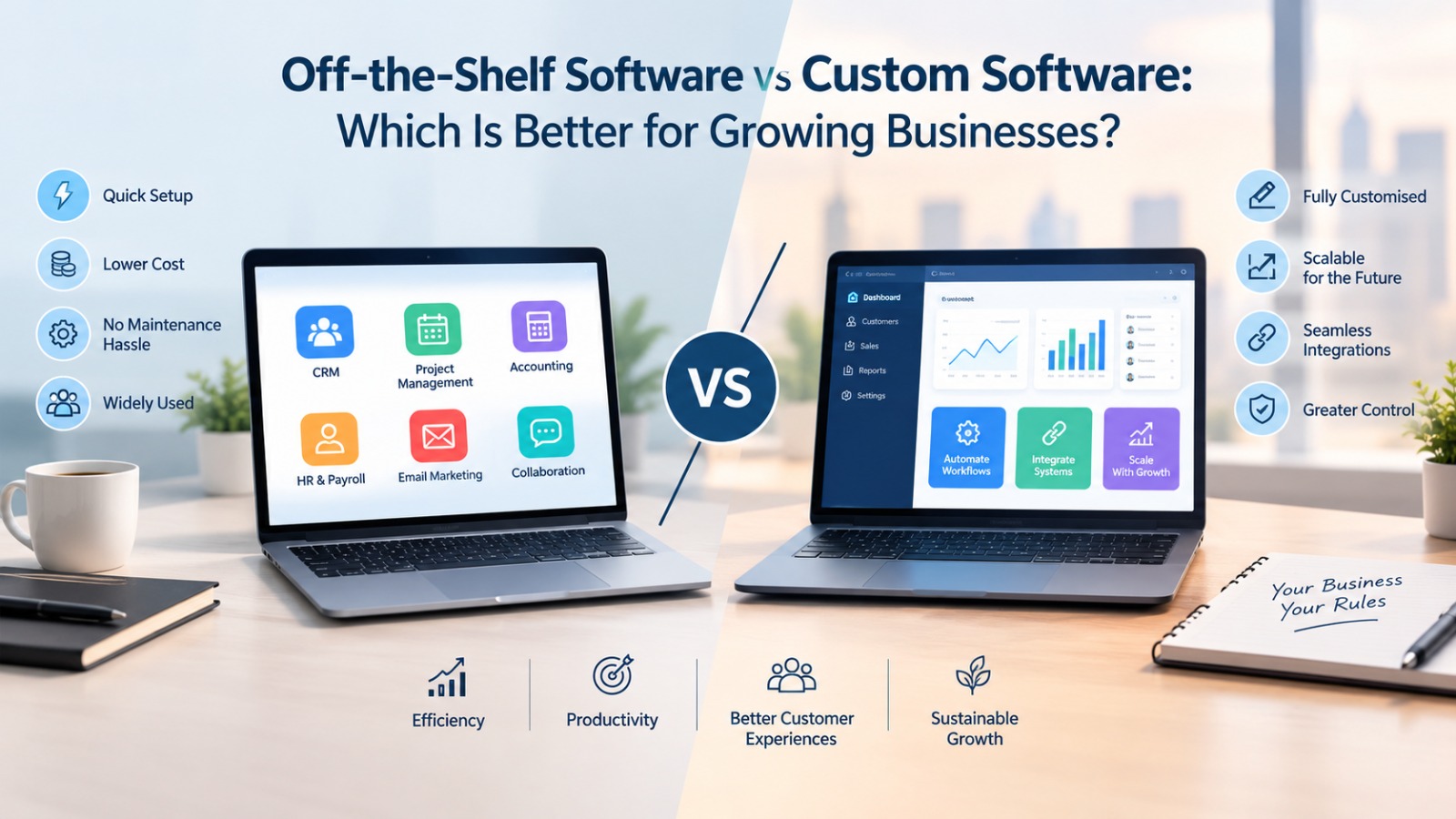
Businesses often compare custom development with ready-made software. Off-the-shelf solutions can be faster to deploy and may have lower initial costs. They can be a practical choice when existing software already meets most of the organization's requirements.
Custom software, on the other hand, gives businesses greater control over functionality, workflows, integrations, data structures, and user experiences. It can be particularly useful when existing solutions require extensive workarounds or when the software itself is expected to become an important part of the company's competitive strategy.
The right option depends on the business problem, budget, timeline, scalability requirements, and level of customization needed.
How Businesses Can Reduce Software Development Costs
Businesses can control development costs by clearly defining requirements before development begins. A detailed project scope reduces uncertainty and helps the development team provide a more realistic estimate.
Prioritizing features is another effective approach. Instead of trying to build everything at once, businesses can identify the features that directly contribute to the project's primary objective. Additional features can then be introduced in later development phases.
Using reusable components, established frameworks, cloud services, third-party APIs, and proven technologies can also reduce unnecessary development effort. However, technology choices should be based on the project's actual requirements rather than simply selecting the cheapest or newest technology available.
Agile development can also help businesses manage budgets by dividing development into smaller iterations. Regular feedback allows teams to identify problems early and adjust priorities before large amounts of development work are completed.
How to Estimate Your Custom Software Development Budget
Before approaching a software development company, businesses should prepare a clear description of the problem they want to solve. They should identify the target users, primary features, expected number of users, required platforms, integrations, security requirements, and desired launch timeline.
Businesses should also distinguish between must-have features and nice-to-have features. This makes it easier for developers to create different versions of the project and provide more accurate estimates.
Instead of asking only, "How much will my software cost?", businesses should ask what is included in the quotation. The proposal should ideally explain development stages, deliverables, estimated timelines, testing, deployment, maintenance, third-party services, and post-launch support.
Final Thoughts
The custom software development cost in 2026 depends on much more than the number of lines of code or the number of screens in an application. Project complexity, features, UI/UX requirements, integrations, security, development team, technology choices, infrastructure, testing, and ongoing maintenance all influence the final investment.
For businesses, the goal should not simply be to find the lowest development quotation. The more important objective is to build software that solves a genuine business problem, provides a good user experience, remains secure, and can evolve as the organization grows.
Whether a business needs a simple internal application, a customer-facing platform, an automation system, or an AI-powered product, starting with clearly defined requirements can make the development process more predictable. A well-planned custom software project can turn technology spending into a long-term business asset rather than simply another operational expense.
If your business is considering custom software development in 2026, Devobyte can help transform your requirements into a scalable digital solution. From planning and UI/UX design to development, testing, deployment, and ongoing improvements, working with an experienced development team can help businesses build software around their actual workflows and long-term goals
To read more such articles kindly visit: Devobyte