In today's competitive online environment, simply generating website traffic is not enough. Businesses need a structured strategy that guides potential customers from their first interaction with a brand to the final purchase and beyond. This is where a digital marketing funnel becomes valuable.
A well-planned funnel helps businesses understand the customer journey, deliver relevant content at different stages, generate qualified leads, and improve conversion rates. Whether you run a startup, small business, e-commerce company, or B2B organization, an effective digital marketing funnel can make your marketing efforts more measurable and efficient.
What Is a Digital Marketing Funnel?
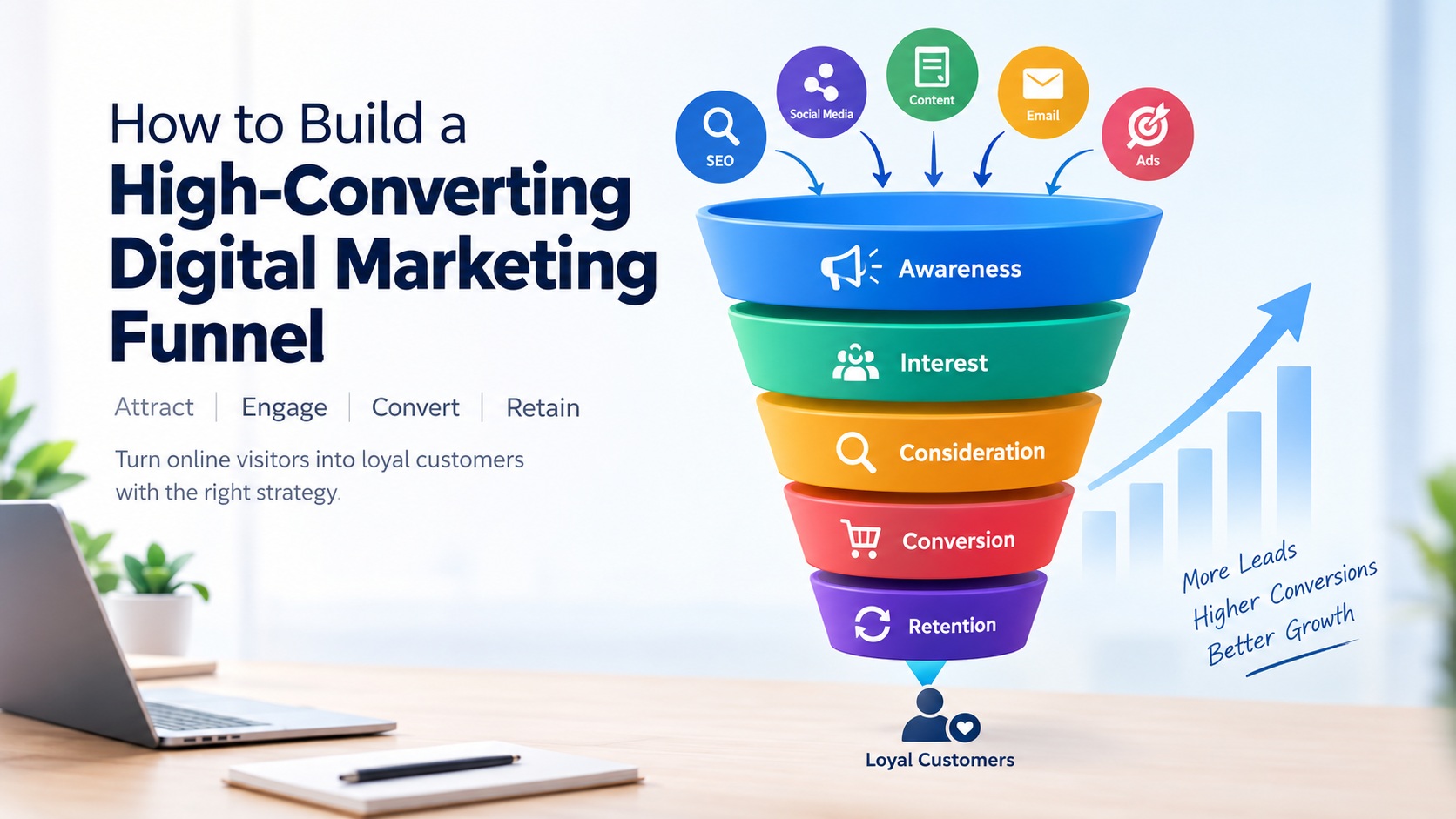
A digital marketing funnel represents the different stages a potential customer moves through before becoming a paying customer.
The journey generally includes:
Awareness → Interest → Consideration → Conversion → Retention
Each stage requires a different marketing approach. Someone discovering your brand for the first time should not receive the same message as someone who has already requested a product demo.
Understanding these differences allows businesses to create more personalized marketing campaigns.
Why Businesses Need a Digital Marketing Funnel
Many businesses invest heavily in social media, search engine optimization, advertising, and content creation but struggle to convert that attention into revenue.
A digital marketing funnel connects these activities into a structured customer journey.
A properly designed funnel can help businesses:
- Generate targeted website traffic
- Capture potential customer information
- Nurture leads effectively
- Improve conversion rates
- Reduce customer acquisition waste
- Understand customer behavior
- Increase repeat purchases
- Measure marketing performance
Instead of treating every visitor as a potential immediate buyer, businesses can build relationships with prospects over time.
1. Build Awareness With the Right Content
The first stage of the funnel is awareness.
At this stage, potential customers may not know your business or may only be beginning to recognize a problem that your product or service can solve.
Your objective should be to attract the right audience rather than simply generate large amounts of traffic.
Useful awareness strategies include:
- SEO-optimized blog articles
- Social media content
- Short-form videos
- Educational guides
- YouTube content
- Industry reports
- Podcasts
- Search advertising
For example, a CRM company could publish content about improving customer retention instead of immediately promoting its CRM software.
This approach provides value while introducing the brand to potential customers.
2. Turn Visitors Into Leads
Getting people to your website is only the beginning. The next challenge is converting visitors into leads.
Businesses can use lead magnets and strategically placed calls-to-action to encourage visitors to share their contact information.
Examples include:
- Free ebooks
- Checklists
- Templates
- Industry reports
- Free consultations
- Product demos
- Webinars
- Free trials
A landing page should clearly explain what the visitor receives and why it is valuable.
Avoid asking for unnecessary information. A complicated form can reduce the number of people willing to submit their details.
3. Nurture Leads With Relevant Content
Not every lead is ready to make a purchase immediately.
Some prospects may still be researching solutions, comparing providers, or waiting for the right time to buy.
This is where lead nurturing becomes important.
Businesses can nurture leads through:
- Email marketing
- Educational content
- Case studies
- Webinars
- Retargeting campaigns
- Product comparisons
- Customer success stories
The objective is to answer questions, address objections, and demonstrate how your product or service can solve a real problem.
4. Use Social Proof to Increase Trust
Trust plays a major role in the purchasing decision.
Before choosing a company, potential customers often look for evidence that other people have successfully used its products or services.
Businesses can strengthen trust by displaying:
- Customer testimonials
- Reviews
- Case studies
- Client logos
- User-generated content
- Industry certifications
- Business achievements
Instead of simply claiming that your product works, show potential customers how it has helped others.
5. Optimize the Conversion Stage
At the conversion stage, the prospect is close to making a purchasing decision.
Your website should make the next step obvious.
Strong conversion elements include:
- Clear CTAs
- Simple checkout processes
- Transparent pricing
- Product demonstrations
- Free trials
- Easy enquiry forms
- Multiple payment options
- FAQ sections
For example, instead of using a generic CTA such as “Learn More,” a SaaS business might use “Start Your Free Trial.”
Specific CTAs communicate exactly what happens next.
6. Retarget Visitors Who Did Not Convert
A large percentage of website visitors will leave without making a purchase.
That does not necessarily mean they are lost customers.
Retargeting campaigns can reconnect with people who previously interacted with your website, product pages, or advertisements.
Depending on the platform and applicable privacy requirements, businesses can use retargeting to promote:
- Products viewed previously
- Special offers
- Free trials
- Relevant content
- Product demonstrations
- Consultation opportunities
The messaging should remain relevant and avoid excessive advertising frequency.
7. Focus on Customer Retention
A digital marketing funnel should not end immediately after a customer makes a purchase.
Existing customers can become repeat buyers, brand advocates, and valuable sources of referrals.
Retention strategies can include:
- Personalized email campaigns
- Loyalty programs
- Customer education
- Product recommendations
- Exclusive offers
- Feedback campaigns
- Customer support
- Referral programs
Customer retention can therefore become an important part of long-term digital growth.
8. Measure the Performance of Your Funnel
A funnel cannot be effectively improved without measurement.
Businesses should monitor metrics across different stages of the customer journey.
Important metrics include:
| Funnel Stage | Key Metrics |
|---|---|
| Awareness | Reach, impressions, website traffic |
| Interest | Engagement, time on page, content downloads |
| Lead Generation | Conversion rate, cost per lead |
| Consideration | Demo requests, trial registrations |
| Conversion | Sales, conversion rate, customer acquisition cost |
| Retention | Repeat purchases, retention rate, referrals |
Looking at these metrics together can reveal where potential customers are dropping out of the funnel.
Common Digital Marketing Funnel Mistakes
Businesses often make the mistake of focusing on only one part of the customer journey.
Common problems include:
Generating traffic without a conversion strategy: High traffic does not automatically mean high revenue.
Using the same message for everyone: Different customer segments have different needs and buying motivations.
Ignoring mobile users: A poor mobile experience can negatively affect engagement and conversions.
Making CTAs unclear: Visitors should understand what action they are expected to take.
Failing to follow up with leads: A potential customer may require several interactions before making a purchase.
Not analyzing funnel data: Without measurement, businesses may continue investing in channels that are not producing meaningful results.
How AI Can Improve Your Digital Marketing Funnel
Artificial intelligence is increasingly being used to improve different stages of the marketing funnel.
Businesses can use AI for:
- Customer segmentation
- Personalized content
- Chatbots
- Lead qualification
- Email automation
- Predictive analytics
- Content recommendations
- Campaign optimization
For example, an AI chatbot can answer basic customer questions and direct qualified prospects toward a sales representative or product demonstration.
However, automation should support the customer experience rather than replace useful human interaction completely.
Final Thoughts
Building a successful digital marketing funnel is about more than attracting visitors. Businesses need to understand the complete customer journey and create relevant experiences at every stage.
From awareness and lead generation to conversion and retention, every stage provides an opportunity to improve customer engagement and business performance.
The most effective approach is to continuously test different content, offers, channels, landing pages, and CTAs while using performance data to identify opportunities for improvement.
A strong digital marketing funnel can ultimately turn scattered marketing activities into a structured system for generating leads, increasing conversions, and building long-term customer relationships.