
Introduction
In the competitive digital landscape, having a visually appealing website is no longer enough to attract customers and generate business results. A website must also be fast, reliable, easy to navigate, and technically efficient to convert visitors into leads or paying customers. This is where technical optimization and conversion rate optimization (CRO) work together. While conversion rate optimization focuses on encouraging visitors to take meaningful actions, technical optimization ensures that the website provides a smooth and seamless experience that makes those actions easier.
For businesses investing in digital marketing, understanding the relationship between technical website performance and conversion rates is essential. Even a well-designed landing page with compelling content and a strong call to action can underperform if it loads slowly, contains broken links, or creates unnecessary friction during the checkout or enquiry process. By addressing technical barriers, businesses can improve user experience, increase engagement, and generate more value from their existing website traffic.
What Is Technical Optimization?
Technical optimization refers to improving the underlying performance, structure, accessibility, and functionality of a website. It includes areas such as page speed, mobile responsiveness, website architecture, server performance, browser compatibility, security, and technical SEO. These elements may not always be visible to visitors, but they significantly influence how people interact with a website.
From a conversion-focused perspective, technical optimization is about removing obstacles that prevent users from completing their intended actions. For example, if a potential customer visits a service page but encounters a slow-loading form, they may leave before submitting an enquiry. Similarly, if an e-commerce website experiences checkout errors, interested buyers may abandon their purchases. Technical improvements help reduce these problems and create a more dependable digital experience.
Unlike purely visual changes, technical optimization often requires examining how a website operates behind the scenes. Developers may need to optimize code, compress images, improve caching, reduce unnecessary scripts, refine database queries, or fix problems affecting mobile usability. The ultimate objective is not simply to make a website technically sound but to ensure that its performance supports measurable business outcomes.
Understanding the Connection Between Technical Optimization and Conversion Rates
A conversion occurs when a visitor completes a desired action, such as submitting a contact form, requesting a product demonstration, subscribing to a newsletter, downloading a resource, or purchasing a product. The conversion rate is generally calculated by dividing the number of conversions by the total number of visitors or sessions, depending on the measurement method used, and multiplying the result by 100.
Technical performance influences this process at several stages. Visitors must be able to access a website, understand its content, navigate between pages, and complete the required action without unnecessary delays or errors. Every technical issue that interrupts this journey creates an opportunity for potential customers to leave.
Consider a B2B company that receives 10,000 website visits each month and converts 2% of those visits into leads. This produces 200 leads monthly. If technical improvements and better user experience help increase the conversion rate to 3%, the same traffic could generate 300 leads. That represents 100 additional leads without requiring an increase in advertising expenditure or website traffic.
This example is illustrative rather than a guaranteed outcome. Actual improvements depend on the website's existing performance, audience behaviour, offer, and the quality of the optimization work. Nevertheless, it demonstrates why businesses should evaluate website performance alongside traffic acquisition when planning their digital growth strategies.
Website Speed: Reducing the Cost of Waiting
Page speed is one of the most important technical factors affecting the user journey. Modern internet users expect websites to respond quickly, particularly when accessing content through mobile devices or slower internet connections. When a page takes too long to load, visitors may lose interest before they even see the information that could convince them to take action.
Slow websites can affect conversions in several ways. A delayed landing page may prevent users from seeing a call-to-action button promptly. Heavy scripts can make forms unresponsive, while poorly optimized images can delay the display of important product information. In each situation, the website creates friction that can reduce the likelihood of conversion.
Developers can improve page speed by compressing images, removing unused JavaScript and CSS, enabling browser caching, using content delivery networks where appropriate, and reducing unnecessary third-party scripts. Server response times and database performance should also be reviewed, particularly for websites with dynamic content or complex functionality.
Google's Core Web Vitals provide useful measurements for understanding the real-world user experience. Largest Contentful Paint (LCP) measures loading performance, Interaction to Next Paint (INP) evaluates responsiveness, and Cumulative Layout Shift (CLS) measures visual stability. Google's commonly recommended thresholds are an LCP of 2.5 seconds or less, an INP of 200 milliseconds or less, and a CLS score of 0.1 or less, assessed at the 75th percentile of page visits.
Improving these metrics can help make a website feel faster and more reliable. However, speed optimization should be evaluated alongside conversion data because a technically faster website does not automatically guarantee more sales. The objective is to combine strong performance with relevant content, persuasive messaging, and an effective conversion journey.
Mobile Optimization: Making Every Interaction Easier
Mobile devices account for a substantial share of web traffic across many industries. Consequently, a website that performs well on desktop computers but provides a frustrating mobile experience may lose valuable conversion opportunities. Small buttons, difficult navigation, overlapping content, and forms that require excessive typing can discourage users from completing their intended actions.
Mobile technical optimization involves creating responsive layouts, ensuring that text remains readable on smaller screens, making interactive elements easy to tap, and minimizing unnecessary scrolling. It also includes testing important conversion paths across different screen sizes, browsers, and device capabilities.
For example, a prospective customer visiting a software company's website on a smartphone should be able to understand the service, review its benefits, and request a demonstration without struggling with the interface. If the contact form is difficult to complete or the submit button is hidden below an oversized banner, the business may lose a qualified lead.
Businesses should therefore examine mobile conversion rates separately from desktop conversion rates. A significant difference between the two may indicate problems with mobile usability, loading performance, form design, or the overall user journey. Identifying these differences helps development teams prioritize improvements based on actual user behaviour rather than assumptions.
Technical SEO and Conversion-Focused Website Architecture
Technical SEO helps search engines discover, crawl, and understand website content. Important elements include crawlability, indexability, XML sitemaps, canonical tags, structured data where appropriate, HTTPS security, and a logical website architecture. Although these activities are often associated with organic search visibility, they can also support conversions by helping users reach relevant pages and navigate a website more efficiently.
A clear website structure allows visitors to move naturally from general information to more specific service pages, product details, pricing information, and contact forms. If important pages are difficult to find or internal links lead to outdated destinations, users may struggle to progress through the conversion journey.
For example, a business offering custom software development may attract visitors through informational blog posts. Relevant internal links can guide readers toward service pages that explain the company's capabilities, followed by case studies or consultation forms. This creates a more useful path from information discovery to commercial intent.
Technical SEO should therefore be approached as part of a broader website strategy. Improving search visibility can attract relevant visitors, while clear navigation and well-connected pages help those visitors find the information they need. Businesses should also monitor whether organic landing pages generate meaningful engagement, enquiries, and sales rather than measuring success through rankings or traffic alone.
Website Errors and Broken Conversion Paths
Technical errors can directly prevent visitors from completing valuable actions. Broken links, missing pages, failed form submissions, JavaScript errors, payment failures, and server outages can disrupt the user journey at critical moments. These problems are particularly costly when they affect high-intent pages such as pricing pages, product pages, booking forms, and checkout screens.
Imagine a visitor who has compared several service providers and finally decides to request a consultation. If the enquiry form fails to submit or displays an unclear error message, the visitor may abandon the process rather than trying again. The business could lose a qualified lead despite successfully attracting and persuading that visitor.
Regular technical audits can help identify these issues before they significantly affect performance. Website owners should monitor broken links, test important forms, review server logs, check error reports, and verify that analytics and conversion tracking work correctly. Automated monitoring can be especially useful for businesses with large websites or frequently updated content.
Error messages should also help users recover from problems. Instead of displaying a generic failure notice, a form should explain what went wrong and provide clear next steps where possible. By combining technical reliability with helpful feedback, businesses can reduce frustration and protect valuable conversion opportunities.
Conversion-Focused Forms and Checkout Optimization
Forms and checkout processes are often the final steps between visitor interest and business results. Even when a website attracts qualified traffic and communicates a compelling offer, an unnecessarily complicated conversion process can reduce completion rates.
Technical optimization can make these processes more efficient by reducing loading delays, removing unnecessary form fields, improving validation, and ensuring compatibility across devices and browsers. Forms should preserve entered information when possible, provide clear feedback when a field needs correction, and confirm successful submissions.
For B2B websites, asking for excessive information during an initial enquiry can discourage potential customers. Businesses should evaluate whether every requested field is necessary at that stage of the sales process. A shorter form may reduce friction, although the ideal number of fields depends on lead qualification requirements and the business model.
E-commerce websites face similar challenges during checkout. Unexpected errors, confusing navigation, slow payment processing, and unclear shipping information can contribute to cart abandonment. Testing the complete purchase journey, from adding a product to receiving an order confirmation, helps identify issues that individual page checks might miss.
The goal is to make the conversion process simple without sacrificing essential information, security, or business requirements. Every additional step should serve a clear purpose.
Website Security and Customer Trust
Security is another important part of technical optimization because visitors need confidence before sharing personal information, submitting business enquiries, or making payments. An insecure website, broken security indicators, suspicious redirects, or unreliable payment functionality can undermine that confidence.
Businesses should use HTTPS, maintain their website software and dependencies, configure appropriate access controls, and implement reliable backup and monitoring practices. Websites that collect sensitive information should also apply suitable data protection measures and ensure that third-party integrations are handled securely.
Security improvements do not automatically increase conversion rates, and their impact can vary by industry and audience. However, reliable security practices help protect users, reduce technical risks, and support the trust required for successful digital transactions.
For businesses operating in competitive markets, trust is especially important. A technically dependable website reinforces the impression that the organization takes its services, customers, and information seriously.
Analytics and Technical Performance Monitoring
Technical optimization becomes more effective when businesses measure how website issues influence user behaviour. Analytics tools can reveal where visitors enter the website, which pages they leave, how far they progress through a conversion funnel, and whether they complete important actions. Performance monitoring tools can then help identify technical problems associated with those patterns.
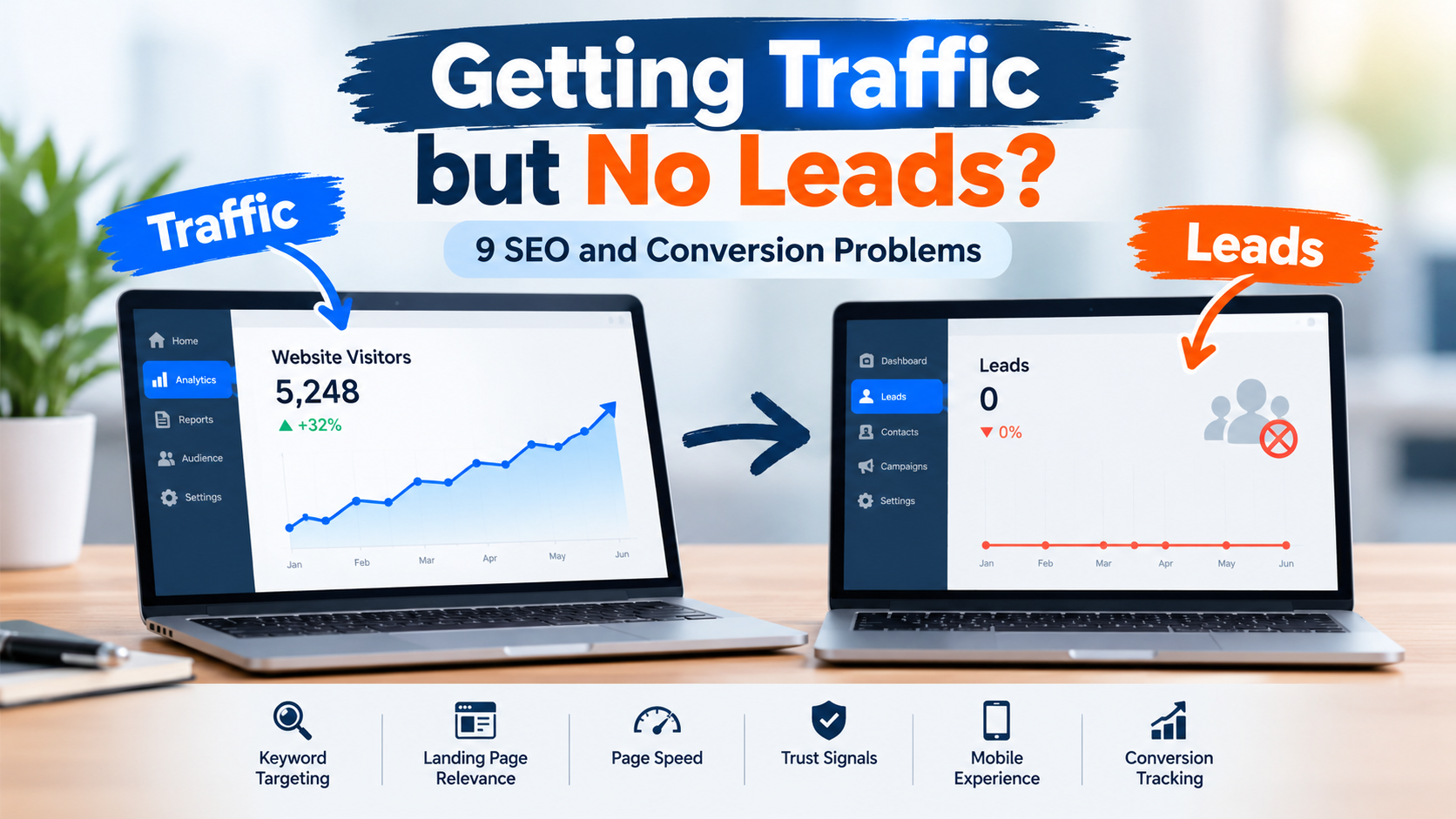
For example, a landing page may attract substantial organic traffic but generate very few enquiries. Before rewriting all the content, the business should investigate loading performance, mobile usability, form functionality, traffic quality, and the clarity of the call to action. The problem may be technical, strategic, or a combination of several factors.
Businesses should establish a baseline before making major changes. Useful indicators include conversion rate, form completion rate, checkout completion, page load performance, JavaScript errors, mobile conversion rate, and the number of failed submissions. For lead-generation websites, qualified leads and sales opportunities may be more meaningful than raw form submissions.
Accurate measurement is essential. Conversion events should be configured correctly, duplicate events should be avoided, and changes to tracking should be tested. Otherwise, a business may mistake a measurement problem for a genuine performance improvement.
A/B Testing: Connecting Technical Changes to Business Results
Not every technical improvement produces the same effect across websites. A/B testing can help businesses determine whether a proposed change leads to better conversion outcomes. This involves comparing two versions of a page or experience while keeping other relevant factors controlled as much as possible.
For example, a company might test a lighter landing-page implementation against its existing version, or compare a simplified mobile form with the original form. The team can then evaluate whether the change improves completion rates without introducing problems elsewhere.
Testing should begin with a clear hypothesis. Instead of simply stating that a page needs to be faster, a team might hypothesize that reducing the delay before a contact form becomes interactive will increase completed enquiries on mobile devices. This creates a measurable question that can guide development and evaluation.
Reliable experiments require sufficient data, appropriate measurement, and careful interpretation. Businesses should avoid declaring success based on a small number of conversions or making several simultaneous changes that prevent them from identifying what caused the result. Where controlled testing is impractical, teams can use before-and-after monitoring while acknowledging that other factors may influence the outcome.
Prioritizing Technical Improvements for Maximum Conversion Impact
Businesses rarely have unlimited development time or resources. The most effective approach is to prioritize technical issues according to their potential business impact, the number of users affected, and the effort required to fix them.
Critical problems should come first. These include broken checkout functionality, failed enquiry forms, security vulnerabilities, and errors affecting essential landing pages. Next, teams can address performance issues, mobile usability problems, and inefficient conversion paths. Longer-term improvements may include architectural changes, advanced monitoring, and broader technical SEO enhancements.
A practical optimization process begins with a website audit and the collection of baseline performance data. The team identifies the most important conversion journeys, investigates barriers, implements targeted changes, and measures the results. The cycle then repeats as new opportunities emerge.
This approach prevents businesses from spending development resources on minor technical details while major conversion barriers remain unresolved. It also encourages collaboration between developers, designers, SEO specialists, content marketers, and sales teams, ensuring that technical work supports broader business objectives.
Common Technical Optimization Mistakes to Avoid
One common mistake is treating website speed as the only measure of success. A fast website with unclear messaging, an irrelevant offer, or a confusing conversion process may still produce poor results. Technical performance should support the wider customer experience rather than replace other conversion optimization activities.
Another mistake is making changes without collecting baseline data. Without reliable measurements, businesses may struggle to determine whether an optimization actually improved performance. Tracking should be established and verified before significant changes are introduced.
Ignoring mobile users is equally problematic. A website may appear flawless on a desktop monitor while containing usability issues on smaller screens. Testing across real devices and different network conditions can uncover problems that desktop-only testing misses.
Finally, businesses should avoid implementing every optimization recommendation without considering context. Some third-party scripts may be necessary for essential functionality, while certain technical changes may introduce compatibility problems. Each recommendation should be assessed according to its benefits, risks, and relevance to the website's objectives.
Conclusion
Technical optimization is much more than a development task. It is an important part of improving conversion rates, strengthening user experience, and helping businesses achieve better results from their digital presence. From faster page loading and responsive design to reliable forms, effective website architecture, and accurate analytics, technical improvements can remove barriers that prevent visitors from becoming customers.
For businesses seeking sustainable digital growth, the most effective strategy combines technical performance with conversion-focused design, useful content, and continuous measurement. Instead of treating website development and conversion rate optimization as separate activities, organizations should align them around a shared objective: making it easier for the right visitors to take the right action.
At Devobyte, a thoughtful approach to website development and technical optimization can help businesses build digital experiences that are designed around performance, usability, and measurable business goals. By identifying technical bottlenecks, prioritizing meaningful improvements, and testing the results, businesses can create websites that do more than attract visitors—they can turn more of those visits into valuable opportunities.
To read more such articles kindly visit : Devobyte