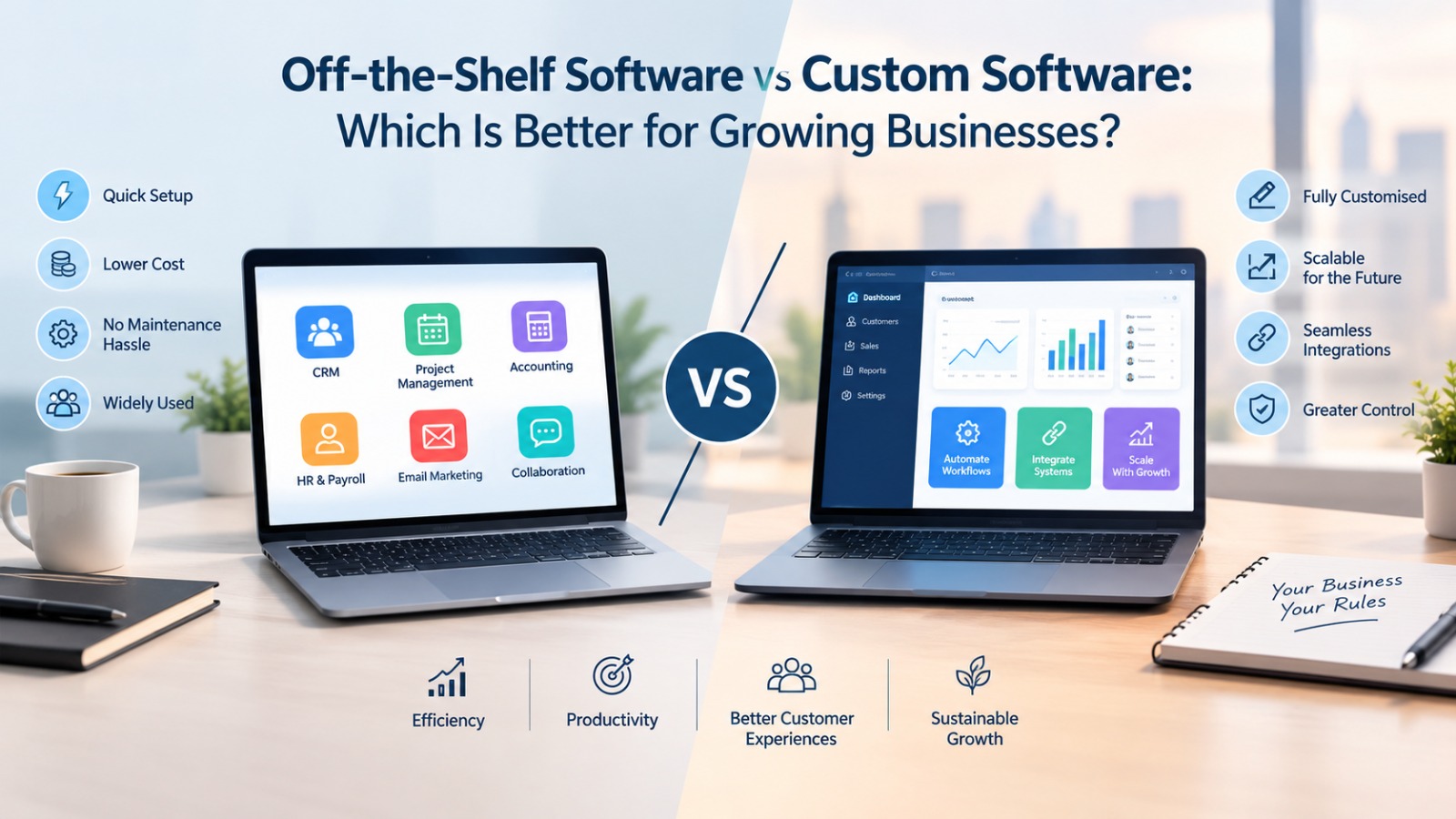
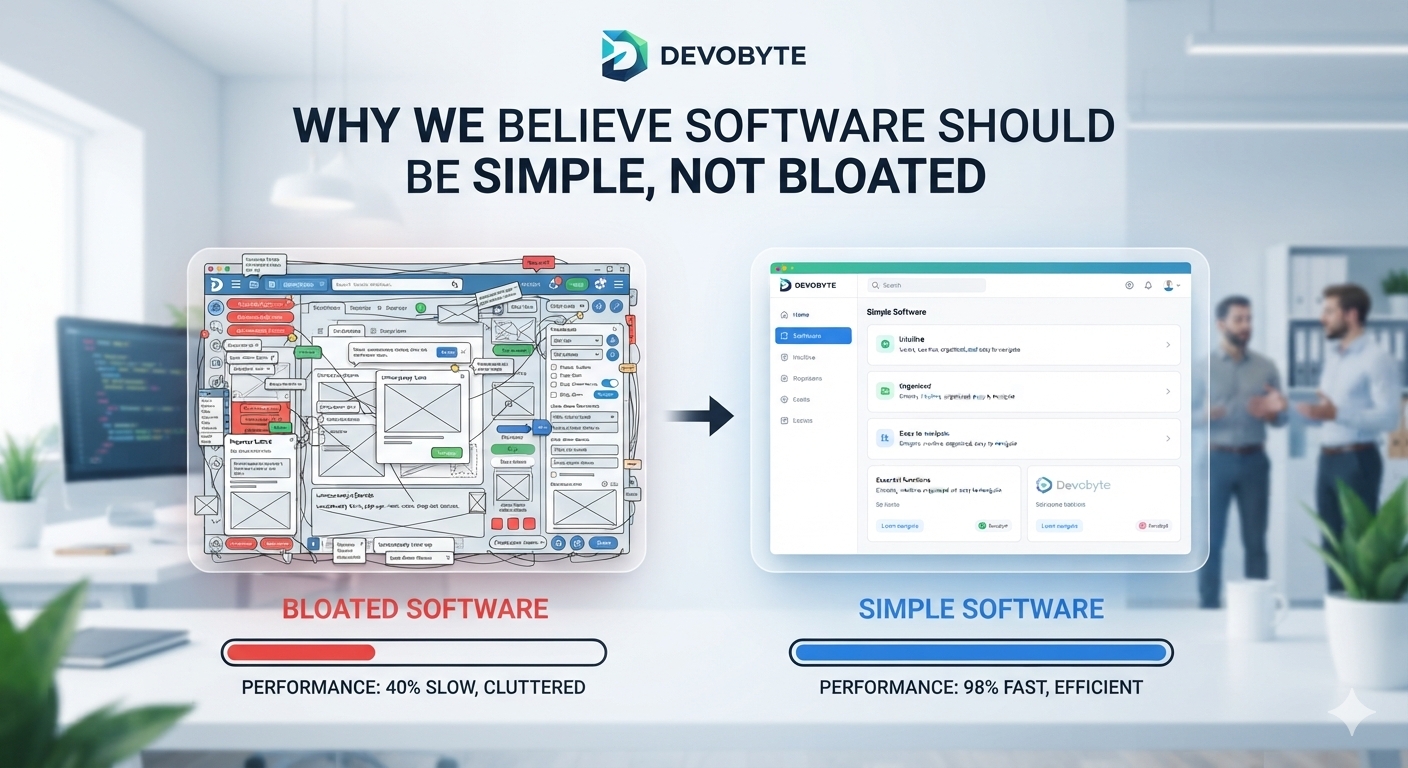
In today’s digital world, software is everywhere. Businesses use software to manage operations, communicate with customers, analyze data, automate repetitive tasks, and make important decisions. But as software platforms become more advanced, they can also become increasingly complicated. At Devobyte, we believe that software should solve problems rather than create new ones. That is why we believe software should be simple, useful, and focused—not bloated with unnecessary features.
What Does “Simple Software” Really Mean?
Simple software does not mean basic or limited software. Instead, it means software that is easy to understand, easy to use, and designed around the actual needs of its users. A well-designed application can have powerful technology working behind the scenes while presenting users with a clean and straightforward experience.
When people open a software application, they should not need hours of training just to understand where to click or how to complete a basic task. The best software reduces friction and allows users to focus on their work instead of figuring out the software itself.
The Problem With Bloated Software
Software becomes bloated when too many features, integrations, settings, and unnecessary functions are added without considering whether users actually need them. While having more features may look impressive, it can make a product harder to navigate and maintain.
A business may purchase software because it offers dozens of capabilities, but if employees regularly use only a small portion of those features, the additional complexity may not provide much value. Instead, users may spend more time searching through menus, configuring settings, or learning complicated workflows.
This is one reason why software simplicity matters for businesses. The goal should not be to create software with the longest feature list. The goal should be to create software that helps users accomplish meaningful tasks efficiently.
More Features Do Not Always Mean More Value
There is a common assumption that software becomes better when more features are added. However, features only create value when they solve a real problem.
For example, a small business may need a simple system to manage customers, track sales, generate reports, and communicate with its team. Adding dozens of advanced features that the business rarely uses may make the platform more difficult to operate.
Effective software development starts by understanding the problem. Developers and product teams should ask what users actually need, what challenges they face, and which functions can make their work easier. Every feature should have a purpose.
Simple Software Improves User Experience
User experience is one of the most important parts of modern software. Even technically powerful software can fail to deliver value if users find it confusing or frustrating.
A simple interface helps users understand what they can do and how they can do it. Clear navigation, logical workflows, useful notifications, and intuitive design can make a significant difference in how people interact with an application.
This is why user-friendly software is becoming increasingly important. Businesses do not simply need software that works. They need software that their employees and customers can use comfortably and confidently.
Simplicity Can Reduce Training Time
Complex software often requires extensive training before employees can use it effectively. This can become a significant cost for businesses, particularly when new employees join the organization.
Simple software can reduce this learning curve. When the interface and workflows are intuitive, users can understand the system more quickly. This allows teams to spend less time learning software and more time focusing on their actual responsibilities.
For businesses, this can contribute to faster adoption and better productivity.
Simple Software Can Also Be Powerful
One of the biggest misconceptions about simplicity is that simple software must lack advanced capabilities. In reality, powerful technology and simple user experiences can exist together.
Modern applications can use artificial intelligence, automation, cloud infrastructure, APIs, analytics, and sophisticated databases while still providing users with a clean interface.
The complexity should often exist behind the scenes rather than being pushed onto the user. Good software development hides unnecessary complexity while keeping useful functionality accessible.
Build Around the User, Not the Feature List
At Devobyte, we believe software should begin with people and problems rather than features. Before developing a product, it is important to understand who will use it and what they are trying to accomplish.
A feature should answer a meaningful question: Does this solve a genuine user problem? Does it make a process faster, easier, or more reliable? Does it provide measurable value?
If the answer is no, adding the feature simply because competitors have it or because it sounds impressive may not be the right approach.
Simplicity Makes Software Easier to Maintain
Software development does not end when an application is launched. Software needs to be maintained, updated, secured, and improved over time.
A complicated system with unnecessary components can become harder to maintain. Every additional feature may introduce additional dependencies, testing requirements, security considerations, and potential points of failure.
A focused software architecture can make future development more manageable. Developers can understand the system more easily, identify problems faster, and introduce improvements without unnecessarily affecting other parts of the application.
Simple Software Can Support Business Growth
Simplicity does not mean building software that can only handle a small business or a limited number of users. Instead, good software should have a clear foundation that can evolve as business requirements change.
Scalable software can start with the essential functionality and expand when there is a genuine need for additional capabilities. This approach can help businesses avoid paying for or managing functionality they do not currently require.
The objective is to build scalable digital solutions that grow with the organization rather than forcing the organization to adapt to unnecessary complexity.
The Importance of Purposeful Design
Good software design is not simply about making an application look attractive. It is about making every part of the product serve a purpose.
From the navigation menu to the dashboard, buttons, forms, notifications, and reports, each element should help users complete a task. Removing unnecessary elements can sometimes improve an application more than adding new ones.
This is where thoughtful UI/UX design becomes important. A clean interface can make complex processes feel much simpler for the person using the software.
Simple Software Can Save Time and Resources
Businesses invest in software because they want to improve efficiency. If a software platform introduces unnecessary steps, complicated workflows, or confusing interfaces, it can work against that objective.
Simple software can help employees complete tasks with fewer unnecessary steps. Over time, even small improvements in efficiency can have a meaningful impact on productivity.
For organizations, the value of software should therefore be measured not only by the number of features it offers but also by how effectively it helps people work.
Our Approach at Devobyte
At Devobyte, we believe technology should serve people, not the other way around. Our approach to custom software development focuses on understanding business requirements, identifying real problems, and building solutions that are practical and easy to use.
We do not believe that every business needs a massive platform filled with features. Sometimes, the best solution is a focused application that solves a specific problem exceptionally well.
Whether it is a website, mobile application, business platform, automation solution, or custom software product, the objective should remain the same: create technology that delivers real value without unnecessary complexity.
Simple Is Not Easy—It Is Intentional
Creating simple software can actually require significant thought and discipline. It requires developers and designers to understand which features matter, which processes can be simplified, and which complexity can be removed.
Anyone can add another feature. Creating a product that feels simple while handling complex requirements requires careful planning and execution.
That is why simplicity should not be viewed as a lack of ambition. It should be viewed as a design decision.
Conclusion: Build Software People Want to Use
The future of software is not necessarily about creating products with more buttons, more dashboards, and more features. It is about creating technology that understands what users need and helps them accomplish their goals with less friction.
At Devobyte, we believe software should be simple, purposeful, scalable, and user-focused. Technology should make work easier, not make users work harder to understand technology.
When software solves the right problem, removes unnecessary complexity, and provides a smooth user experience, its value becomes clear. The best software does not need to overwhelm users with everything it can do. It simply helps them do what matters—better and faster.
Simple software is not about doing less. It is about making every part of the software count.